

As the earth tilts and the leaves fall, autumn reminds us that rest, reflection and renewal are not just seasonal rhythms – but spiritual ones. In this meditation, Major Peter McGuigan explores how this season mirrors the soul’s journey
‘Autumn is more the season of the soul than of nature’ – Friedrich Nietzsche.
The trees in our street declare its autumn in the natural world, their green leaves metamorphosing to shades of brown and yellow and orange, separating from branches, falling, crumbling, becoming a stunning multicoloured mosaic on the earth below.
In the northern hemisphere, we are captured by autumn’s beauty, but it won’t be long before our caretaker nature kicks in and we gather up the leaves and send them to their destiny –the ‘green’ garbage or the backyard compost. The leaves are dying after all, and the deadening process will leave trees bare and branches looking like nothing but sticks, at least until spring.
I recently noted autumn being called ‘The Cooling-Off Season’. Periodically, human beings need their own cooling-off period too, a personal autumn when we slow down, shed our skins and are revitalised.
The seasons are vital for the earth. From a purely technical standpoint, they occur because the earth’s axis is tilted, causing the degree of sunlight in the earth’s hemispheres to vary as she orbits the sun – a 365-day round trip. That might sound a little scientific, but the fact is that if the earth was not tilted, we would not have seasons. It would be the same all year round, an unthinkable and unsustainable planetary scenario!
So the earth’s tilt is not by accident. Each of the seasons, particularly in the globe’s mid-latitude or temperate zones, is critical to earth functioning as a sustainable environment for life and autumn is no less vital than summer, winter or spring.
It’s in autumn, or fall as it’s known in North America, that the earth begins to ‘down tools’ and rest for a while. Farmers harvest their crops and keep an extra store for the coming winter months. Animals gather extra supplies to see them through or migrate to warmer climates. Some grow thicker coats and others prepare for hibernation. Energy from the sun reduces, the earth sheds its skin and awaits spring.
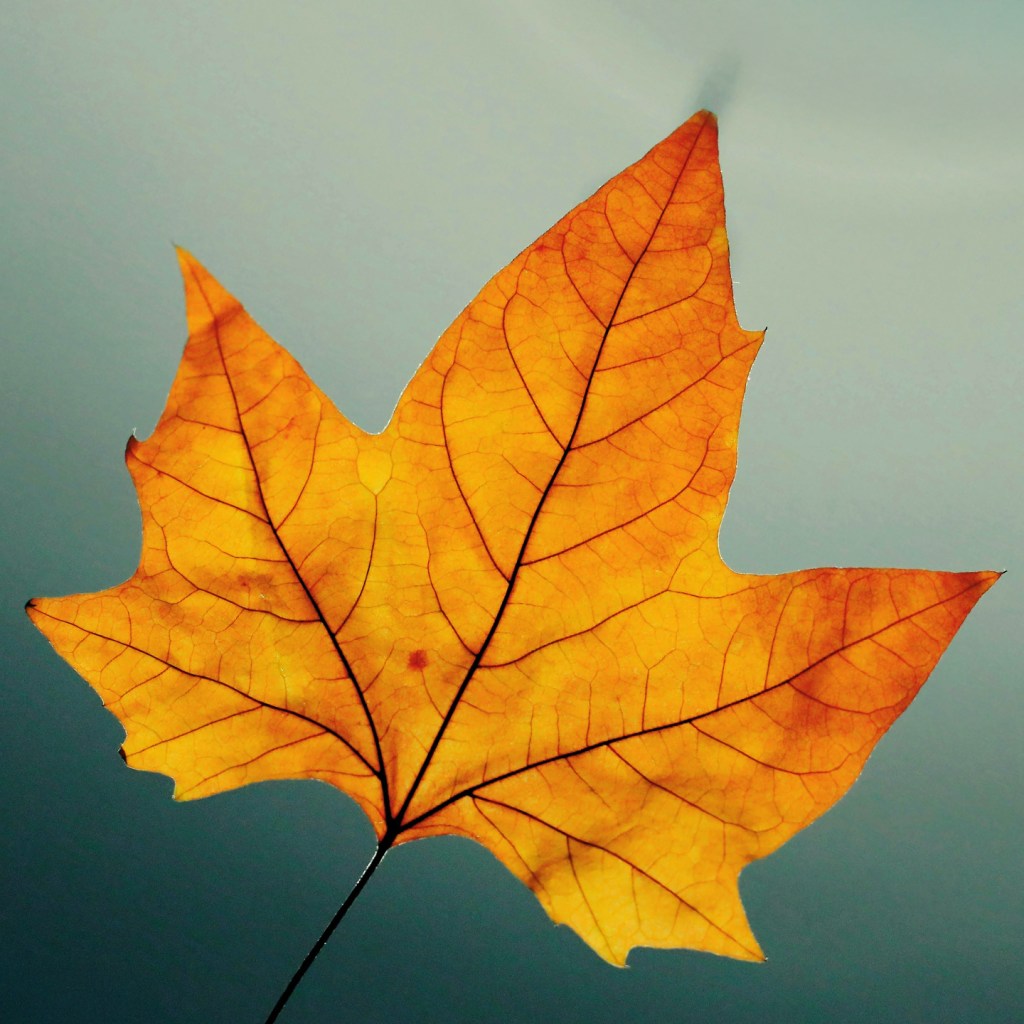
I recently noted autumn being called ‘The Cooling-Off Season’. Periodically, human beings need their own cooling-off period too, a personal autumn when we slow down, shed our skins and are revitalised.
I’m talking first about a stopping experience, a letting go of our life’s old season with its highs and lows, its joys and griefs, its gains and losses, its energy and exhaustion, its perfect days and storms. Then, a transitioning, a process of preparation for something new. For a while, things may look bare on the surface but underneath, as we wait and reflect and seek what’s good for our nourishment, our lives are primed for the day that spring arrives. To our disadvantage, often it’s years, sometimes decades, between the autumns of our lives. Our need for stopping and shedding and waiting for replenishment goes on unmet and our lives are diminished.
Then there’s a world war or an economic crisis or a pandemic, and suddenly, whether we like it or not, we’re forced to stop.
I’ve often thought that God, in all of God’s brilliance, built into life on planet earth a principle of death and resurrection that pervades every dimension of our lives. When you look back, it’s not difficult to discern this pattern of dying and rising, ending and beginning, discarding and replenishing. Most of us experience it every day in some small way, often unthinkingly; and the earth is constantly renewing itself. How moving it was to see fresh green shoots coming out of black burnt trees only weeks after a horrific bushfire season. Profoundly, the archetype of this pattern, its focal point and its greatest demonstration, is the death and resurrection of Jesus.
The Apostle Paul wrote: ‘Therefore, if anyone is in Christ, the new creation has come: the old has gone, the new is here!’ (2 Corinthians 5:17). The autumn of our lives is a vital part of this process. It is a spiritual metamorphosis activated by faith in God’s greatest intervention in the affairs of humanity. It is a transformation of the soul that reverberates outwards and impacts the whole of our lives, making all things new.
Reflection
Take some time to reflect deeply on 2 Corinthians 5:17. What does it mean to you to be a ‘new creation’? How can you make ‘being new’ a daily journey? How can you leave the past behind?
Here is a prayer you can pray as part of your daily journey:
O Lord, thank you that the new is here. Help me to live in the new that you have established through your life, death and resurrection. I realise that my life’s busyness, and sometimes its traps, can take the shine off the new and diminish it.
But today I enter into your newness afresh, letting go of the old and all its hindrances and taking hold of the new with its blessing and purposeful life. I die to self and rise again with you a new creation, fully alive and filled with your Spirit.
Amen.
Footnotes
Originally published in A New Day, a book born out of the author’s experience of the COVID-19 pandemic. The collection of essays explores themes of longing, hope and assurance. This visually striking book combines images and text to inspire and engage – and would make a very meaningful Christmas gift.
Top photo: Sunset at Norwell, Queensland, Australia. By Gareth McGuigan

You must be logged in to post a comment.