

Walking with survivors to create positive change
At the recent UN Commission on the Status of Women in New York, global attention has focused on eliminating violence against women and girls, promoting economic empowerment, and protecting the rights of the girl child. In response, The Salvation Army continues to affirm its commitment to safeguarding women and children, including efforts to prevent sale, sexual exploitation, and abuse.
Global data shows that women and girls make up most identified victims of human trafficking, accounting for approximately 60–71% worldwide. They are particularly vulnerable to sexual exploitation, where females represent a much larger proportion of those affected.
The Salvation Army has always walked alongside survivors, and this is more apparent than ever in the movement’s stance in working with Survivor Leaders to educate and protect women and girls (and all people) in a bid to end modern slavery.
The following case studies highlight the experiences of two women who have survived human trafficking and are now serving as ‘Survivor Leaders’ within The Salvation Army. Their stories demonstrate the transformative power of recovery, resilience, and leadership.
Case study: Diana Barten, The Netherlands

What’s your name?
Diana Barten
What’s your role/connection to The Salvation Army?
Currently, I’m working as a social worker and Survivor Leader in The Netherlands.
What’s your favourite dessert?
I’m not really a fan of desserts.
What do you want readers to know about you being a Survivor Leader in The Salvation Army?
I want readers to know that there are possibilities within The Salvation Army to work from your experience on a policy and international level.
When I think about The Salvation Army’s history, I think it’s beautiful that the movement has a space for employees working from experience as we are best placed to help other people who are in the same position.
How are you bringing change and informing The Salvation Army?
I have brought change on perspective on human trafficking within one of our facilities. Woman are heard more, protected more and less judged because of the work they are doing.
When you think about The Salvation Army’s history, what does it mean to you that survivor leadership has always been part of our DNA?
When I think about The Salvation Army’s history, I think it’s beautiful that the movement has a space for employees working from experience as we are best placed to help other people who are in the same position.
As a Survivor Leader, what do you want readers to understand about who you are and how your lived experience strengthens The Salvation Army’s mission?
My trafficker entered The Salvation Army as a client. At first the Salvation didn’t know how to handle the situation where it came to caring for an employee with lived experience. After recovering from the confrontation I had had with my trafficker, The Salvation Army acknowledged me as a ’Survivor’ and offered me work drawing from my experience.
Can you share one practical example of how your voice or experience has helped shape change within The Salvation Army?
I hope to be a source of knowledge, inspiration and motivation to co-workers and clients on a daily basis.
Why do you believe it is important for The Salvation Army to have a Global Survivor Community?
Working as a Survivor Leader can be very lonely at times. A global ‘Survivor Community’ would be helpful to connect with other Survivor Leaders and would be of source of support.
What message would you give to someone who is considering joining the Global Survivor Community?
To engage! Together we can make a difference.
Frey, Africa
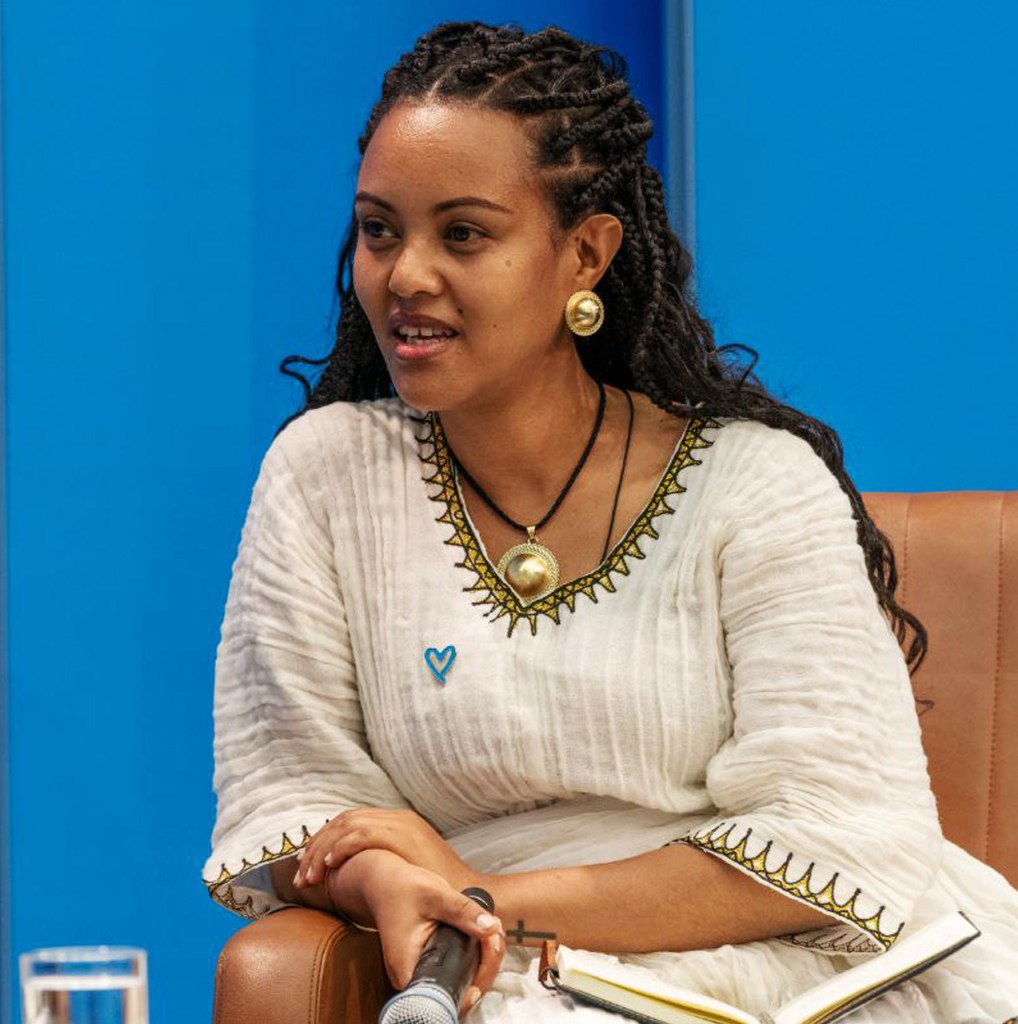
What’s your name?
Firehewot Abiy Worku (Frey)
What’s your role/connection to The Salvation Army?
I’m a Survivor Leader in The Salvation Army in Africa on a six-month fellowship program.
What’s your favourite dessert?
Crème caramel
My story did not end with harm or exploitation.
What do you want readers to know about you being a Survivor Leader in The Salvation Army?
I want readers to know that being a Survivor Leader in The Salvation Army is not about being defined by what happened to me, but about the strength, wisdom and agency that emerged through healing. My lived experience informs my leadership, but it does not limit it. It gives me a deeper understanding of dignity, justice and what true restoration looks like.
I also want readers to know that survivor leadership in The Salvation Army is not symbolic. It is meaningful, necessary and transformative. When survivors are trusted with leadership, programs become more responsive; systems become more humane and communities move closer to real freedom. Most importantly, I want readers to know that being a Survivor Leader in The Salvation Army is, for me, a testimony of God’s redemption. My story did not end with harm or exploitation. God met me there, restored what was broken and continues to shape my life for his purpose. My lived experience is not something I lead from alone; I lead with faith, guided by God’s grace and truth.
How are you bringing change and informing The Salvation Army?
I help inform programs and leadership by advocating for approaches that prioritise dignity, choice and safety of survivors. I am currently developing a training module for Salvation Army employees; particularly for those who are engaging with survivors of human trafficking.
Another focus of my work is ethical storytelling, both teaching people how to engage with survivors as well teaching survivors within The Salvation Army how to share their stories safely and effectively. To that end, I have developed a safety toolkit for survivors whether they choose to advocate for others or to live a private life.
I contribute to shaping conversations and decisions by bringing a survivor-informed perspective to planning, training, and collaboration. This has helped shift mindsets from ‘helping people’ to walking alongside them, recognising individuals as partners in their own restoration rather than passive recipients of aid.
I have spoken openly about the need for safe participation, choice, and spiritual dignity for survivors. This has contributed to survivors being invited earlier into planning processes, not just asked to share their stories but to help shape programs, policies and advocacy priorities.
When you think about The Salvation Army’s history, what does it mean to you that survivor leadership has always been part of our DNA?
For me, The Salvation Army is not an organisation that advocates for people from a distance but a movement that gives an opportunity for those who have lived the struggle. In fact, from the very beginning, The Salvation Army created a space for people experiencing poverty, exploitation, addiction and injustice. It then helped them to step in to leadership, ministry and decision making. This concept of survivor leadership is not a new trend for the movement but a foundation of how it has operated since its conception.
Knowing that survivor leadership is in The Salvation Army’s DNA, affirms that lived experience is not a weakness but a strength. It also calls us to accountability. If survivor leadership has always been part of what this movement is about, then we must continue to (intentionally) create safe, ethical, and empowering pathways for survivors to lead without tokenism or harm. Honouring The Salvation Army’s history means ensuring that survivor voices are respected, supported and resourced today and into the future.
As a Survivor Leader, what do you want readers to understand about who you are and how your lived experience strengthens The Salvation Army’s mission?
As a Survivor Leader, I want readers to understand that I am not defined by what happened to me, but by how God has carried me through it and how that journey now shapes my leadership. My lived experience is not a story I use for sympathy; it is a source of wisdom, discernment, and deep compassion. It has taught me to see people first, not problems, and to recognise dignity even in the most broken places.
My experience strengthens The Salvation Army’s mission by grounding it in reality. It helps ensure that our programs, policies and partnerships are survivor-informed, culturally sensitive, and truly responsive to the needs of those we serve. I bring insight into what safety really feels like, what needs to be in place for healing and how well-intended interventions can either empower or unintentionally harm. This perspective strengthens our ability to walk alongside people, not ahead of them.
Can you share one practical example of how your voice or experience has helped shape change within The Salvation Army?
One practical way my voice has helped shape change within The Salvation Army is by influencing how survivor engagement is approached from token consultation to meaningful leadership.
By sharing my lived experience in survivor leadership spaces, I have helped shift conversations toward trauma-informed, faith-rooted and survivor-led decision-making. For example, I have spoken openly about the need for safe participation, choice, and spiritual dignity for survivors. This has contributed to survivors being invited earlier into planning processes, not just asked to share their stories but to help shape programs, policies and advocacy priorities.
Why do you believe it is important for The Salvation Army to have a Global Survivor Community?
The Salvation Army’s development of a Global Survivor Community is crucial because it transforms a fragmented, regional response to human trafficking into a unified, international network of care, empowering survivors to rebuild their lives and preventing re-exploitation. By operating in 134 countries, they can provide consistent, ‘end-to-end’ support that spans borders. Key factors in this global approach include comprehensive care beyond boards; empowerment and resilience; leveraging local expertise globally and safe repatriation and reintegration.
What message would you give to someone who is considering joining the Global Survivor Community?
Joining the Global Survivor Community is a powerful and meaningful step towards turning your personal pain into collective power. It is an opportunity to break the silence and combat the isolation. It is a move from being a victim to agent of change.
You are not alone; it is ok to change your mind and pull back.
Your story should be your strength not a weapon for others to attack you.
Move at your own pace; don’t push yourself so hard.
Take the first step; reach out to the community you will find a ‘tribe’ who understands the path of resilience.

You must be logged in to post a comment.