

Mutual respect and harmony this Christmas
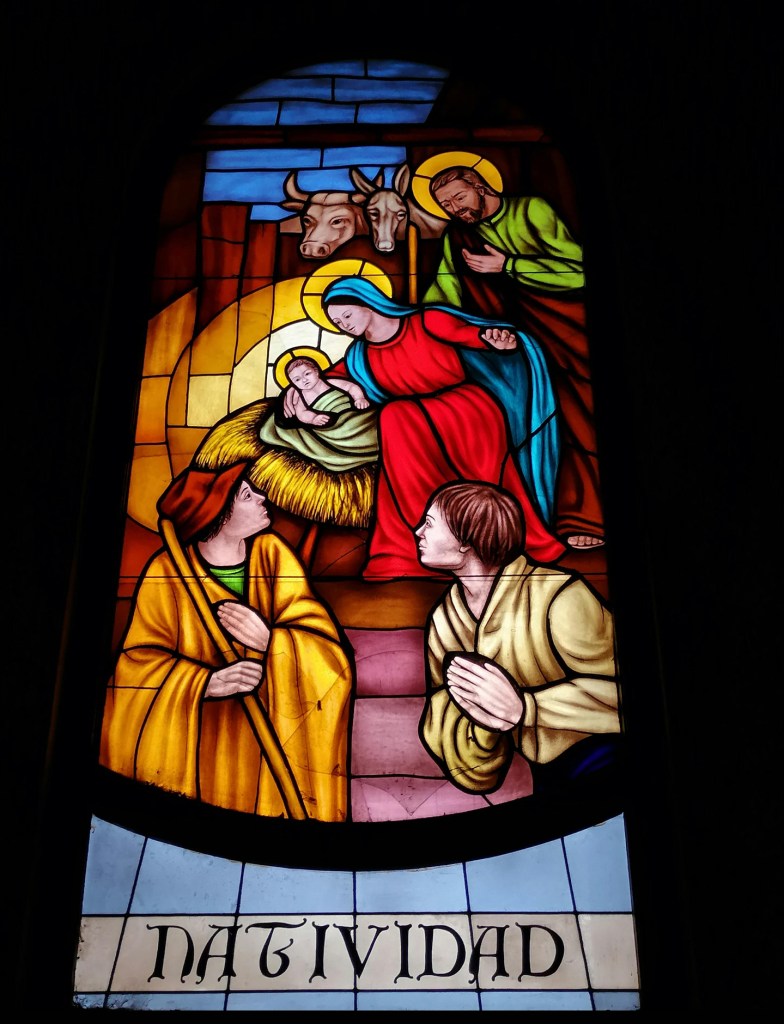
At the Church of the Nativity in Bethlehem, on the site where it is said that Christ was born, different churches, each with their own Christmas traditions, are assigned their own spots to celebrate Christmas according to their traditions. Because of this, you hear a tremendous noise when you enter the church building on Christmas Eve. From every corner of the building, you hear a glorious cacophony of celebration services by the Greek Orthodox, the Armenian Apostolic, and the Roman Catholics. A guide in the church told me that on one Christmas Eve, one lady commented: ‘Isn’t it amazing that churches can agree and respect each other also when it comes to worship differently in the same building at the same time’.
The Apostle Paul calls Christians not to uniformity but to mutual respect and harmony among the various parts of the body, irreplaceable because of their diversity and uniqueness. It is this unity of Christians, unity in diversity, that is to be the beginning, the source, and the example of coexistence within the whole human family, a way of sharing, of compatibility of our gifts, experiences, and perspectives.
Think globally, act locally
The Salvation Army is committed to ecumenical work at local, national, and international levels. What happens at one level can influence and support the mission at another, which is one reason it is worth participating in all three levels.
In 1948, at the World Council of Churches (WCC) meeting in Amsterdam, representatives from the International Headquarters were present, The Salvation Army being one of the founding churches. WCC is a fellowship of 352 churches from more than 120 countries, representing over 580 million Christians worldwide. It enables member churches to reflect, speak, act, worship, work together, and challenge and support one another. Currently, we hold adviser status, which means we are invited to participate in Central Committee meetings and General Assemblies but do not have the right to vote. Presently, Commissioner Jane Paone represents the International Headquarters at the WCC.
The Conference of European Churches (CEC) is a fellowship of Orthodox, Protestant, Anglican, and Old Catholic Churches from all European countries, as well as 40 national councils of churches and organisations in partnership. It seeks to help the European churches renew their spiritual life, strengthen their common witness and service, and promote the Church’s unity and peace in the world. For the last 11 years, the author of this article has been the Officer for European Ecumenical relations representing the European Department, International Headquarters, at CEC.
This Christmas, we might celebrate the birth of Jesus Christ in different ways, but we are unified, despite our differences, in our mutual respect and support for each other.
Among friends
Having read the aims of the WCC and CEC above, I am pleased to share from my own experience that they are not just wishful thinking. I know of several examples where the Salvation Army’s mission benefited from these international ecumenical relations, and I would like to share just one of these here:
In 2005, when the Salvation Army applied to be registered as a church and faith community in Poland, the authorities rejected the application despite it meeting all requirements. The Polish lawyers who assisted with the application recommended identifying individuals of international standing willing to write letters to the Polish public, urging them to support the Salvation Army’s registration in their country. As a result, the national ecumenical Salvation Army officer in the UK contacted the Roman Catholic bishops in the UK to ask whether they could help. They contacted Bishop Brian Farrell, the Vatican’s Promoting Christian Unity, who then approached the Roman Catholic Bishops in Poland who subsequently informed the Polish authorities that they could not identify any reason to prevent the Salvation Army from entering Poland. They strongly recommended that the Salvation Army register as a church and faith community for the benefit of the Polish people. The decision to block the registration was overturned within a few months, due to pressure from the Roman Catholic Bishops in Poland, thanks to ecumenical international relations.
This Christmas, we might celebrate the birth of Jesus Christ in different ways, but we are unified, despite our differences, in our mutual respect and support for each other.
You must be logged in to post a comment.