
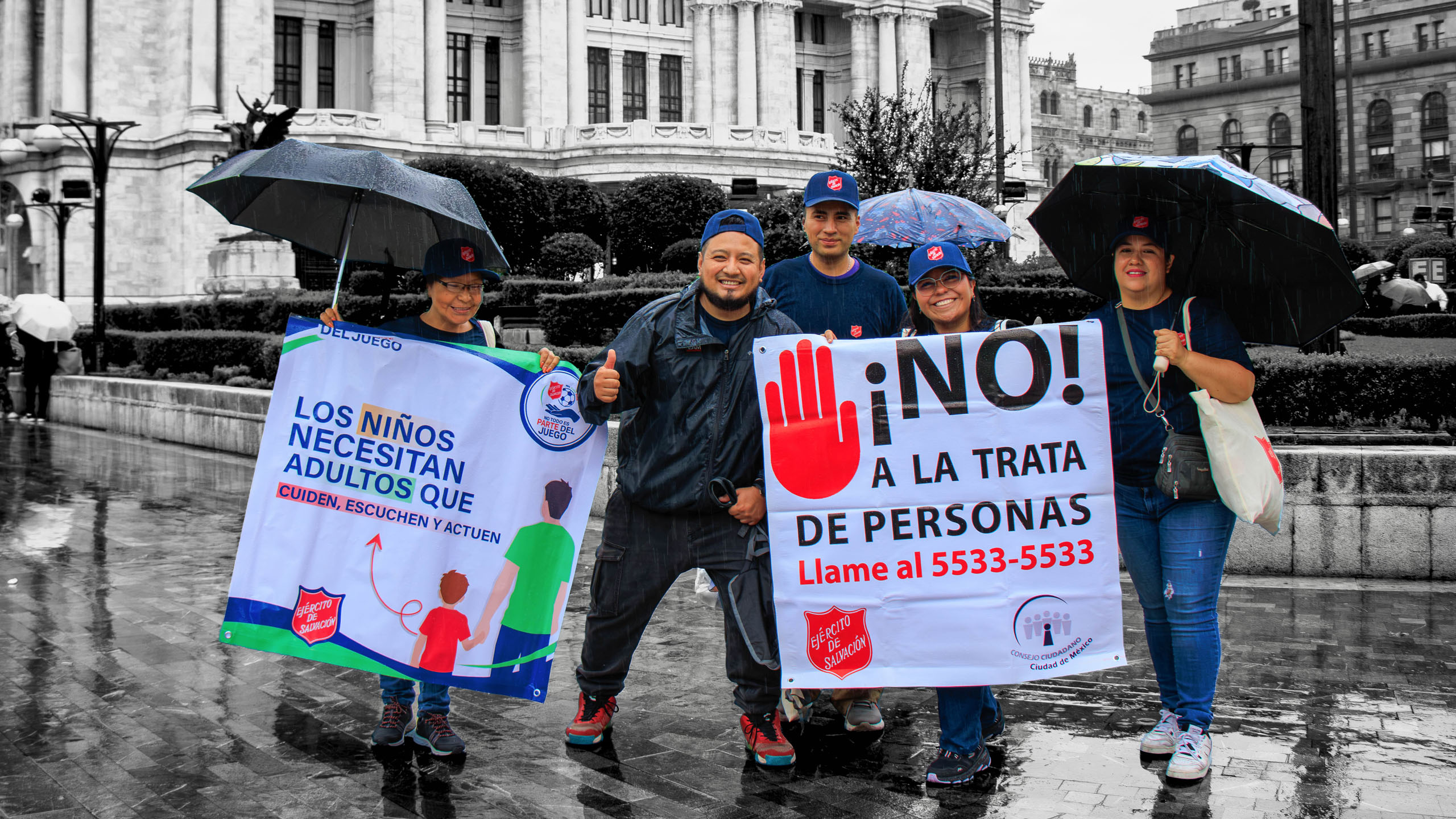
Raising awareness of the continuing fight against human trafficking in Mexico, during the FIFA World Cup
To read this article in Spanish, please click on the link below
As the excitement of the FIFA World Cup faded and supporters headed home, All the World editor, Rebecca Parish, spoke to Major Ana Figueroa, Territorial Social Secretary for The Salvation Army’s Mexico Territory, about why the fight against human trafficking continues long after the final whistle.
The roar of the crowd had barely subsided as supporters streamed out of stadiums across Mexico. Wrapped in national flags and still reliving the moments that had unfolded on the pitch, thousands filled the streets of Monterrey, Guadalajara and Mexico City.
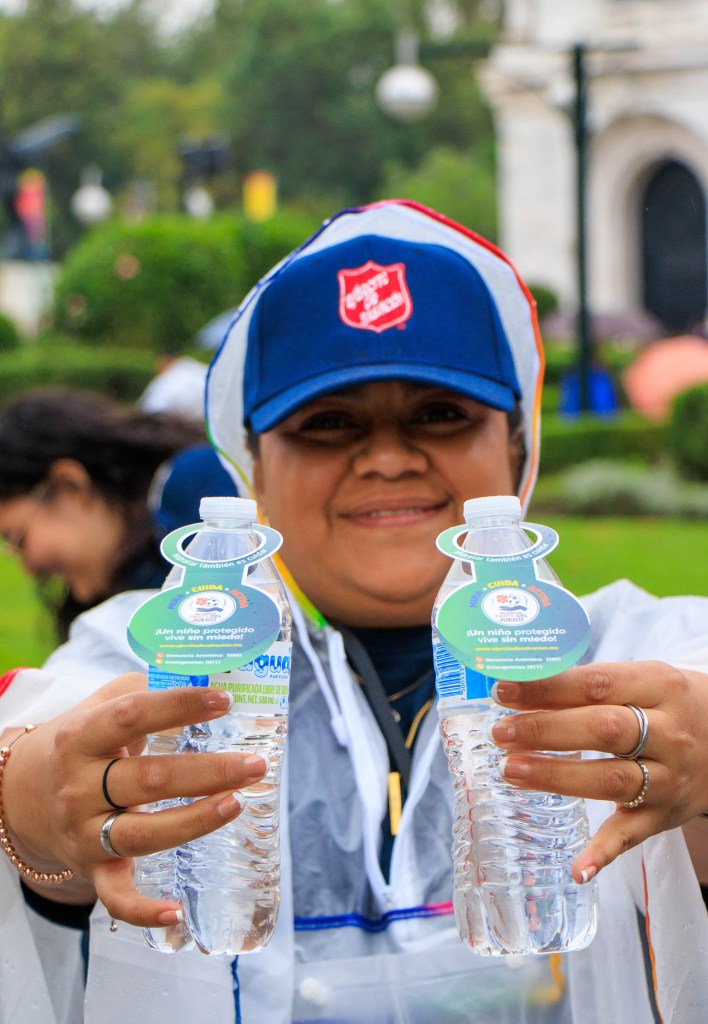
Among them were members of The Salvation Army. Rather than waving banners or celebrating victories, they were offering bottles of water, awareness wristbands and small leaflets carrying a simple but powerful message: ‘Not Everything is Part of the Game’.
For many supporters, it was an unexpected encounter. Yet those brief conversations formed part of a campaign that reached far beyond football, inviting people to recognise the hidden reality of modern slavery and human trafficking. The FIFA World Cup may now be over, but as I spoke with Major Ana Figueroa a couple of weeks later, it quickly became clear that the real story was never about football. It was about people.
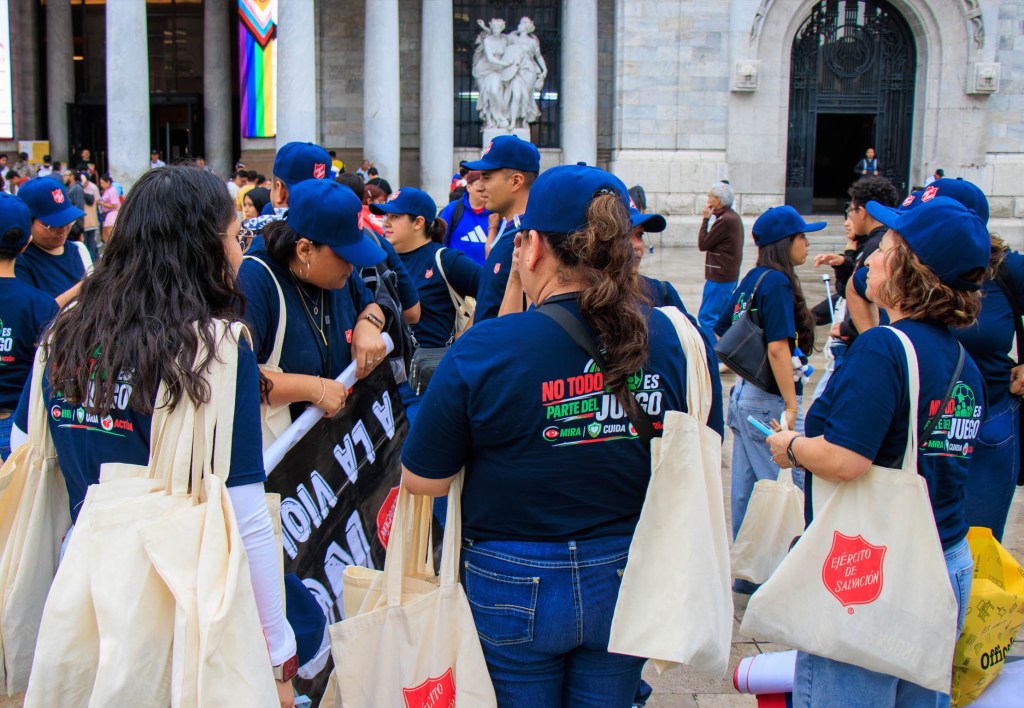
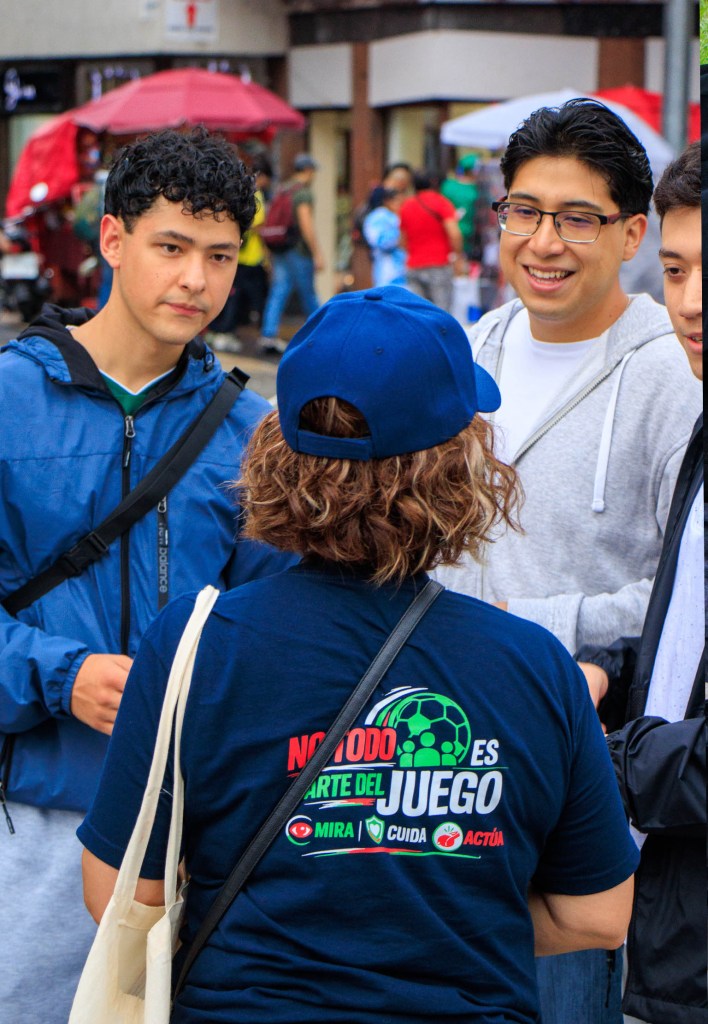
The Salvation Army team out and about talking to fans about modern slavery and human trafficking
Looking beyond the game
For most of us, the World Cup represented celebration, unity and sporting excellence. I asked Major Ana what it represented for The Salvation Army.
‘The World Cup was certainly a celebration,’ she says, ‘but it also gave us a unique opportunity to speak about something that is often hidden in plain sight.’
Throughout the tournament, Salvation Army officers, employees, volunteers and church (corps) members left their church buildings and entered busy public spaces, meeting supporters where they already were. They distributed information, offered practical help and, perhaps most importantly, started conversations. ‘Our purpose wasn’t simply to hand out resources,’ Major Ana explains. ‘We wanted to help people stop, think and become aware of something they may never have considered before.’
Listening to her, it becomes obvious that the campaign was never really about the World Cup. The tournament simply provided a moment when millions of people were gathered together and willing to engage.
The World Cup was certainly a celebration, but it also gave us a unique opportunity to speak about something that is often hidden in plain sight.
A hidden reality
As our conversation develops, Major Ana gently shifts the focus away from stadiums and towards everyday life. ‘Modern slavery and human trafficking are painful realities that affect people in many different circumstances,’ she says.
She describes Mexico’s geographical location, migration routes and social diversity. Children, women, migrants and people can be left facing economic hardship and particularly vulnerable to exploitation. Forced labour, sexual exploitation, false promises of employment, emotional manipulation and coercion are all realities that continue long after international visitors have returned home.
What makes the issue especially difficult, she says, is that it often goes unseen.
‘These situations are often not immediately visible. That is why it is so important to inform people, raise awareness and help communities recognise the warning signs.’
I realise that this is exactly why campaigns like ‘Not Everything is Part of the Game’ matter. Before people can respond, they first have to learn and see.
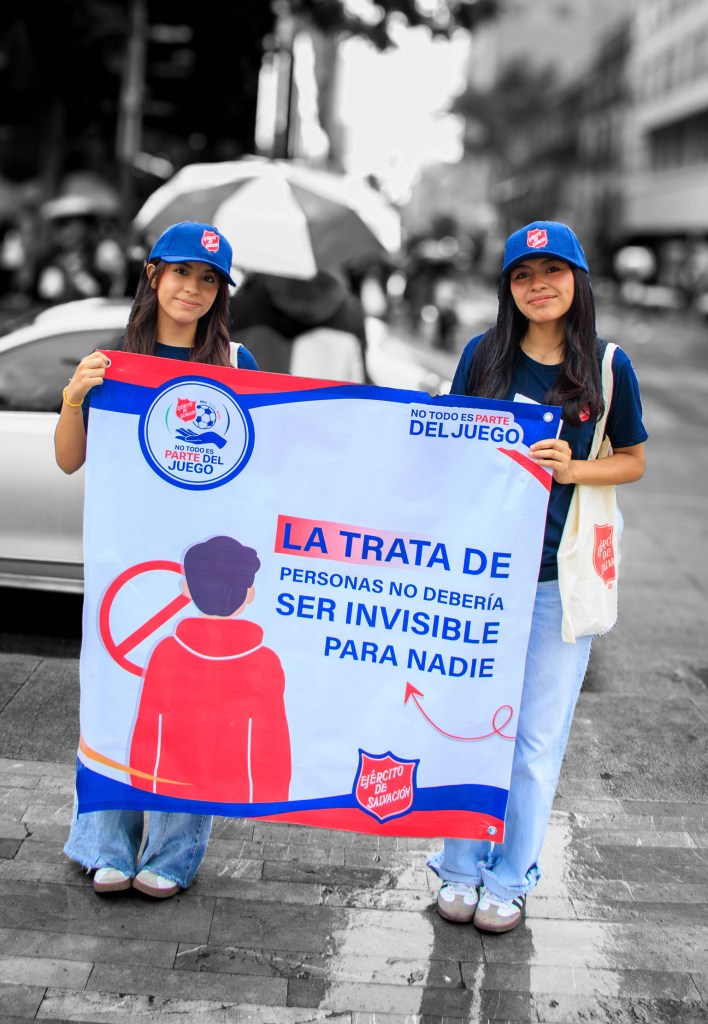
Salvation Army workers and volunteers displaying the clear messages of this campaign

These situations are often not immediately visible. That is why it is so important to inform people, raise awareness and help communities recognise the warning signs.
Choosing awareness over fear
I wondered whether there was any hesitation about raising such a serious subject during one of the world’s biggest sporting celebrations.
Major Ana doesn’t hesitate. ‘We didn’t want to create fear. We wanted to create awareness. We wanted people to pay attention, care for those who might be vulnerable and act responsibly if something didn’t seem right.’ It is a distinction she returns to several times.
The campaign’s simple message – See • Care • Act – was never intended to make people uneasy. Instead, it encouraged them to become more attentive to those around them and to recognise that everyone has the ability to notice when something isn’t right.
Some of the most meaningful conversations, she recalls, began with the simplest gestures: offering a bottle of water on a hot day, handing someone a leaflet or answering a question from a curious football supporter. ‘Sometimes,’ she reflects, ‘all it takes is one conversation to change the way someone sees the world.’
We didn’t want to create fear. We wanted to create awareness.
Ordinary people, extraordinary impact
One theme keeps resurfacing. Major Ana is convinced that preventing human trafficking is not only the responsibility of governments, police or specialist organisations. ‘Everyone has a role to play,’ she says.
She describes some of the warning signs people should be aware of: someone who appears unable to speak freely, who seems controlled by another person, has no access to identification documents or shows obvious signs of fear. Children experiencing sudden behavioural changes, unexplained absences or neglect may also need support.
When I ask how she measures the success of a campaign like this, her answer surprises me. Numbers are not mentioned, nor the quantity of leaflets distributed or bottles of water given away. Instead, she says, ‘If one person, one family or one community becomes more attentive and acts responsibly when faced with a situation of risk, then the campaign has achieved something important.’
It strikes me that this is a very Salvation Army definition of success. Not statistics, but lives.
If one person, one family or one community becomes more attentive and acts responsibly when faced with a situation of risk, then the campaign has achieved something important.
Faith in action
Our conversation moves away from campaigns and practical initiatives towards faith. It becomes clear that, for Major Ana, the two cannot be separated.
‘We believe in a just God who loves life and defends the dignity of every person. We cannot remain indifferent to exploitation, abuse or human trafficking.’ She pauses before continuing, ‘Jesus taught us to draw near to those who are vulnerable, to value those who are ignored and to defend life with love and truth.’


Top left: Major Ana Figueroa; Displaying a poster with the message of the campaign; Handing out awareness wrist bands
Those words seem to capture the heart of everything she has shared. The campaign was never simply about distributing information. It was about reflecting Christ through practical acts of compassion, standing alongside those who are vulnerable and reminding communities that every human life has immeasurable worth.
We believe in a just God who loves life and defends the dignity of every person. We cannot remain indifferent to exploitation, abuse or human trafficking.
Beyond the final whistle
Finally, I ask Major Ana what she hopes people will remember now that the World Cup is over. She reflects for a moment before answering. ‘If one person, one family or one community becomes more attentive and acts responsibly when faced with a situation of risk, then the campaign has achieved something important.’
I find myself thinking that perhaps this is the campaign’s greatest legacy. The stadiums are quiet again. The crowds have dispersed. The football has moved on. But the scourge of human trafficking continues.
And the invitation to See • Care • Act remains with us, challenging all of us, wherever we live, to notice those who are vulnerable, to defend their God-given dignity and to become people who respond with courage, compassion and hope.
Long after the final whistle, that may prove to be the most important victory of all.
Please click here to learn more about The Salvation Army’s work to end modern slavery and human trafficking.
Click on the link below to read this article in Spanish
You must be logged in to post a comment.