
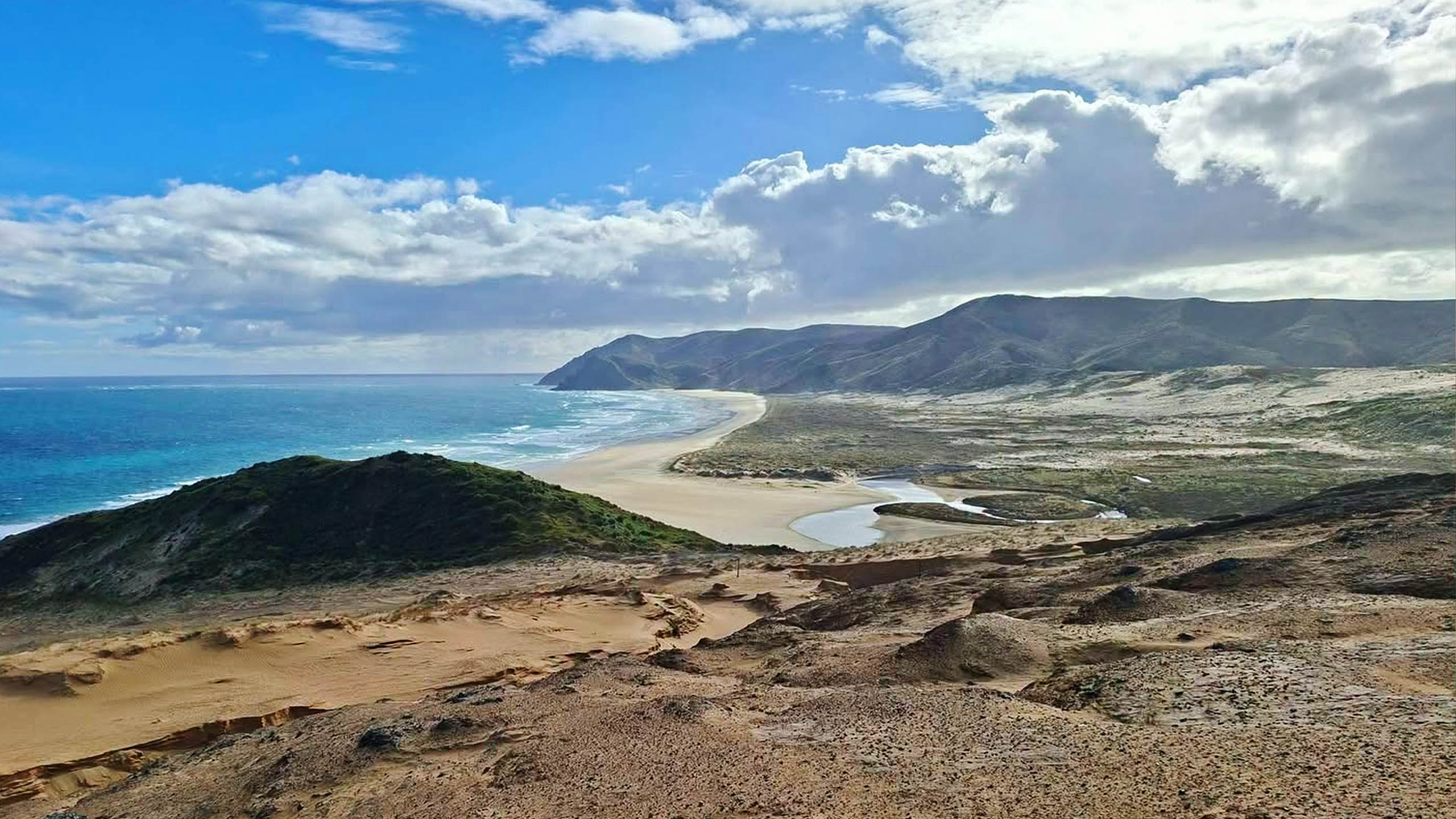
Major Gavin Baxter recently completed an incredible feat of endurance, trekking the length of New Zealand to raise money to combat food insecurity. All the World caught up with him to chat about his experiences during his epic journey.
After almost seven months walking the length of Aotearoa New Zealand, Major Gavin Baxter reached Cape Reinga having faced illness, injury, isolation and some formidable terrain. However, his journey was never simply about reaching the end of the trail. He set out to raise money and awareness for foodbanks and, along the way, encountered both the reality of food insecurity and extraordinary examples of human kindness. Reflecting on the experience for All the World, he shares what kept him walking, what he learned about hunger and how months on the trail deepened his faith.
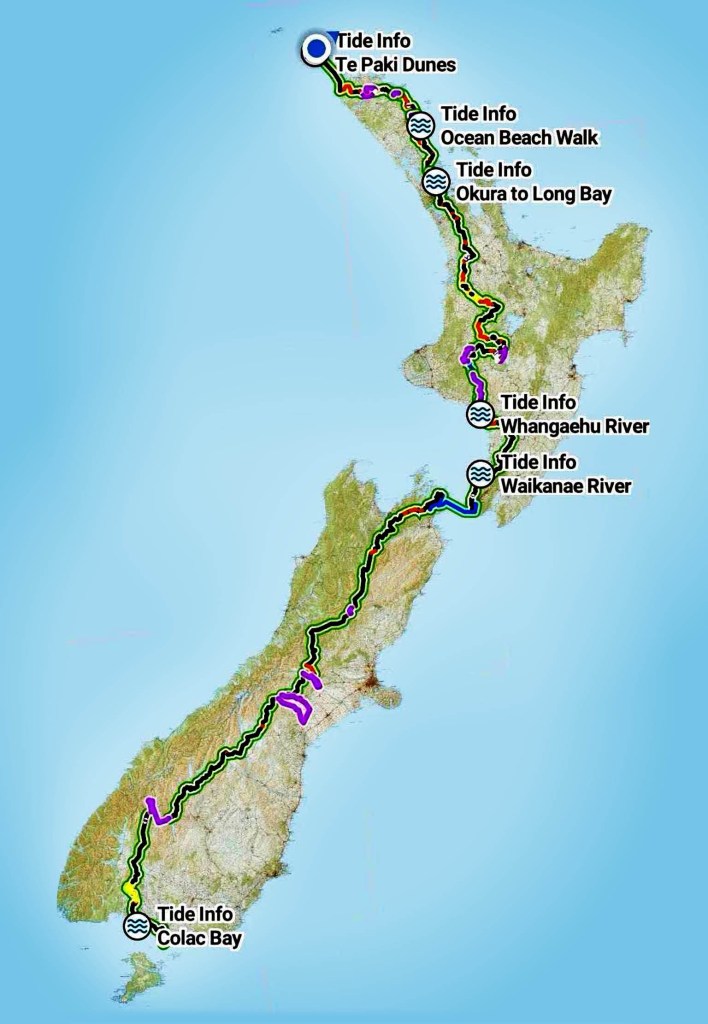
Major Baxter’s route
When Major Gavin Baxter finally reached Cape Reinga, there was no single overwhelming emotion. After almost seven months on the road, there were many.
‘Gratitude, relief, uncertainty, joy, disappointment, privilege, fear,’ he says, recalling the moment he realised he had completed his journey from Bluff, at the southern end of New Zealand, to the country’s northern tip.
‘I miss being distant from the barrage of depressing news and constant advertising of “must-have” trash. I didn’t watch TV for almost seven months.
There was gratitude for the people who had supported him and to God. Relief was both physical and emotional. There was joy at having made it, but also some disappointment that the fundraising target had not been reached. Further donations following his walk would soon change that.
There was also another feeling he had not expected: apprehension about returning to ordinary life. ‘I was suffering more physical pain and tiredness than anticipated,’ Gavin admits. ‘The fear of reintegrating back into society was also stronger than anticipated.’
After months in which his world had often been reduced to the next stretch of trail, the next meal and somewhere to sleep, crowds suddenly seemed daunting.
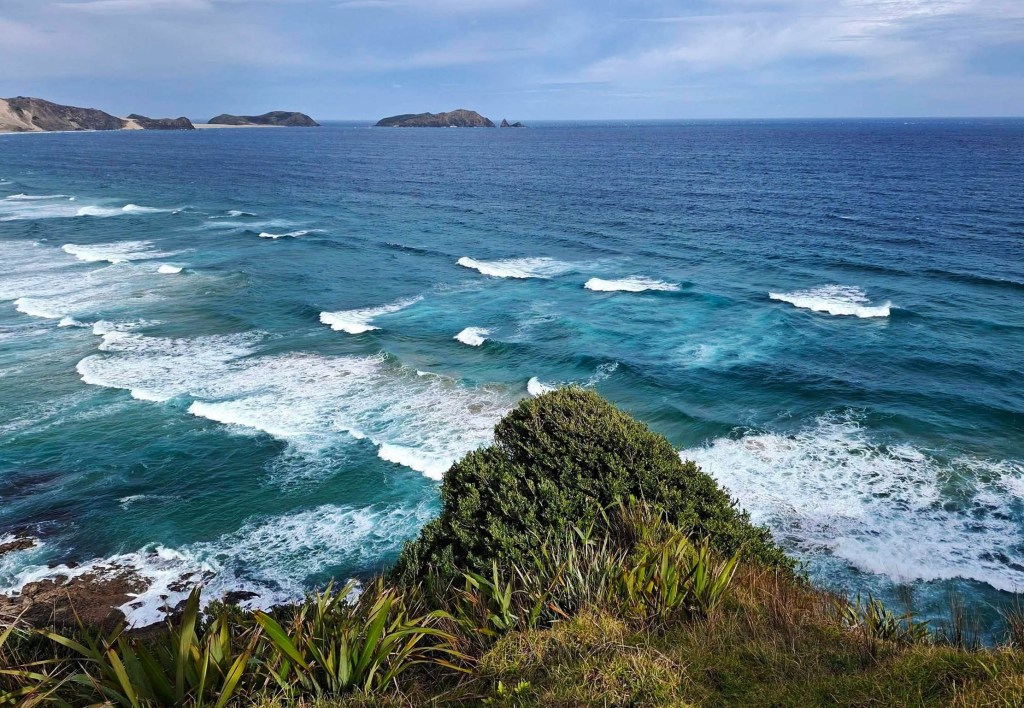
The wild beauty of New Zealand
Beauty, discomfort and the unexpected
Now he is back to ‘normal life’, there is a lot he misses about his trip.
‘I miss the beauty of each day, sometimes in the incredible vistas and other times in the smaller details of insects, leaves and fungi. I miss the companionship of others on the trail, most from different ethnic groups. I miss the prolonged periods of solitude, free to enjoy my own thoughts.
‘I miss being distant from the barrage of depressing news and constant advertising of “must-have” trash. I didn’t watch TV for almost seven months.
‘I don’t miss having wet feet, facing my fear of heights, packing up my tent in the rain, crossing some larger rivers on my own or using long-drop toilets!’
The less glamorous side of life on the trail also included eating much the same food every day, the daily drudgery of packing and repacking equipment and, on occasion, sharing sleeping quarters with rats and possums. There were mishaps too. One of the most painful came before the walking had even properly begun when, one morning, Gavin tripped in the pre-dawn darkness and fell on to a metal bicycle stand.
But some of the smallest discoveries became the most memorable. After several difficult climbs, he reached the top to discover that somebody had arranged stones into the shape of a heart.
For Gavin, anonymous gestures like these created unexpected moments of connection with people who had travelled the same difficult path before him.
‘Help, Lord!’ was what Gavin calls his ‘telegram prayer’ as he once slid down a bank, trying to control the weight of his backpack while searching for rocks and plants strong enough to hold on to, conscious of the powerful river below.
When the trail became dangerous
Some challenges, however, were much more serious.
While crossing the Richmond Ranges, Gavin became increasingly unwell. He did not yet know that he was suffering from a stomach infection. His energy was disappearing and the distances he could cover each day became shorter and shorter. That created another problem. More days on the trail meant his food supplies were running out.
Eventually he activated his personal locator beacon and was flown to Nelson Hospital where tests were carried out and he was prescribed antibiotics. Gavin describes the experience as more frustrating than frightening.
There was, however, little question in his mind about whether he would return. ‘I was keen to get it done!’ After resting and adjusting his route and schedule, he went back to complete the section and continue his journey.
Other days brought different dangers: steep slopes, disappearing tracks, rivers and loose ground beneath his feet. At times his prayers became very short indeed. ‘Help, Lord!’ was what Gavin calls his ‘telegram prayer’ as he once slid down a bank, trying to control the weight of his backpack while searching for rocks and plants strong enough to hold on to, conscious of the powerful river below.
He also prayed for guidance when trail markers disappeared, for strength when his body was exhausted and for wisdom to know when to keep moving and when to stop.
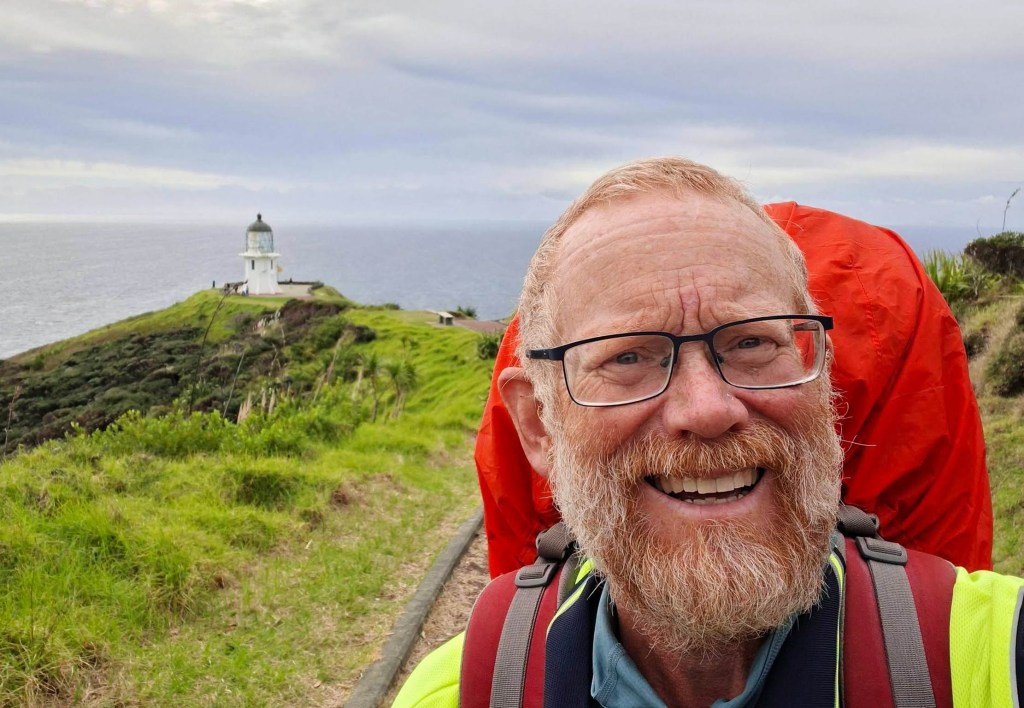
Major Gavin Baxter
Kindness along the way
Alongside the difficulties came repeated reminders of the generosity of strangers.
One volunteer Gavin encountered several times was part of ‘Love Our Huts’, a service to clean and repair sleeping huts alongside replenishing the firewood for the walkers who would follow. On one meeting, the volunteer gave Gavin $25 towards his fundraising. On another occasion, a German hiker quietly contributed $50. One camping ground he visited waived his fee in recognition of his efforts to help others.
On a rural road, a campervan passed before stopping and reversing towards him. Its occupants initially offered Gavin a lift. When he explained why he was walking and declined the ride, they instead offered him water and some delicious homemade ginger crunch.
Travelling through communities across New Zealand showed him both sides of the story. He was troubled by the extent of food poverty in a country capable of producing food for people far beyond its own shores.
These were small acts, perhaps, but together they reinforced something Gavin already believed: that there is a capacity for generosity in people, expressed in ‘a place around a fireplace, a warm drink shared, excess food offered’ and gratitude for what others are willing to give.
Gavin’s wife, Bev, was an important part of the journey too. The walk came at a point of transition from the intensity of active officership, and one unexpected gift was the opportunity for the couple to spend more time together.
Early in the journey, Bev suggested doubling Gavin’s planned rest days. Rather than every break being swallowed up by shopping, organising accommodation and preparing for the next stage, there would be space simply to be together. Gavin believes he could have completed the journey alone, but says Bev’s practical support, particularly in getting supplies to him when they were needed, was ‘invaluable’.
When hunger becomes personal
The purpose behind Gavin’s walk was to raise money and awareness for foodbanks.
Travelling through communities across New Zealand showed him both sides of the story. He was troubled by the extent of food poverty in a country capable of producing food for people far beyond its own shores. Yet he was also encouraged by the local responses he encountered: community gardens, donated supplies, volunteers, advocacy and financial support designed around the needs of individual communities.
One encounter was particularly difficult to forget. While Gavin and Bev were eating in a shopping-centre food court, they noticed a man moving quickly between tables after diners left, searching through the remains of their meals for something to eat.
Gavin himself experienced hunger on the trail, although he is careful not to equate that with poverty.
‘Eating what I had and knowing there was no easy way to supplement it did mean that hunger was my companion on several occasions, but I never had nothing.
‘Eating a reasonable amount was essential to my being able to keep walking and function well in terms of route finding and decision-making.
Walking alone for hour after hour also created something increasingly rare: silence. Away from what Gavin describes as the ‘noise’ of everyday life, he became more conscious of the ‘still, small voice’ of God.
‘It was interesting to reflect on the fact that we have invented new words to explain the results of hunger, such as “hangry”. It reminded me that telling someone to get a job doesn’t work if they are already nutritionally depleted. Their ability to think, to work and to respond is already negatively affected.’
Food insecurity, Gavin argues, cannot simply be reduced to statistics. Figures may reveal the scale of a problem, but they cannot convey ‘the cost of human suffering’, the strain hunger can place on relationships or the embarrassment someone may feel when asking for help with one of life’s most basic necessities.
And responding to hunger must mean looking beyond its immediate symptoms. ‘Systems do need to evolve that do more than band-aid the outcomes,’ Gavin says, arguing that underlying issues such as unemployment and access to practical support must also be addressed.
For Gavin, there is also a clear spiritual dimension to meeting basic human need. He reflects on Jesus feeding the 5,000 and on the biblical instruction to care for those who are hungry and poor.
The real finish line, then, was never simply Cape Reinga. It was drawing attention to the families and individuals for whom having enough food remains an everyday concern.

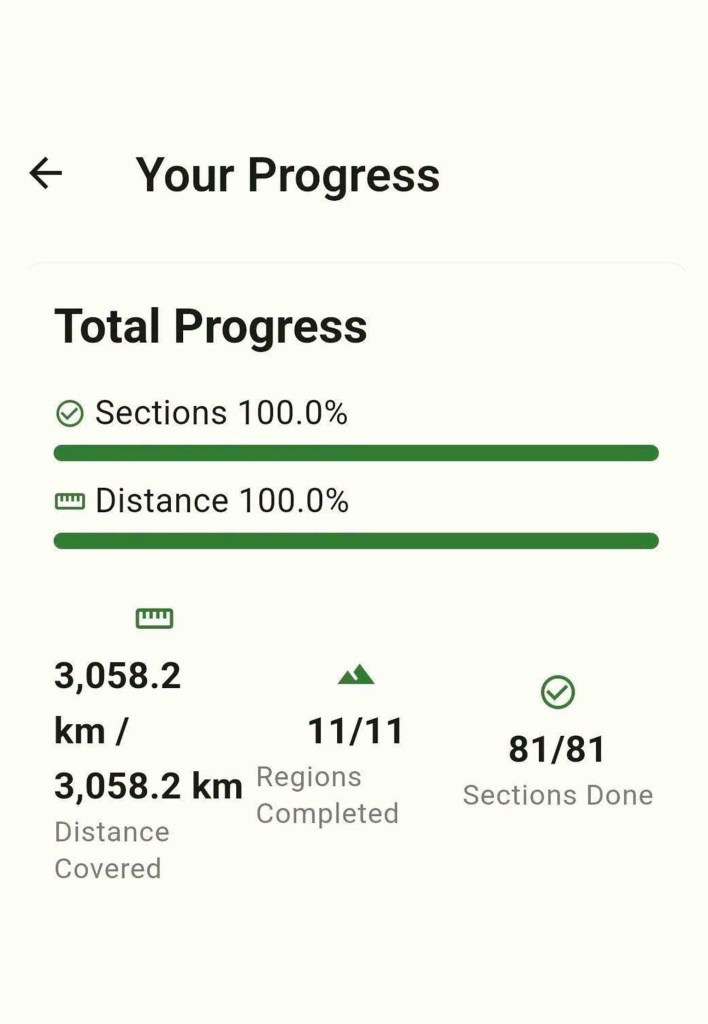
Heading in the right direction
Hearing the ‘still, small voice’
Walking alone for hour after hour also created something increasingly rare: silence. Away from what Gavin describes as the ‘noise’ of everyday life, he became more conscious of the ‘still, small voice’ of God.
‘It was a pleasure to be away from some of the worldly temptations and pressures that barrage us constantly.
‘Being away from that “noise” allowed for a greater awareness of the “still, small voice”. Being surrounded by the beauties and power of creation was inspiring.
‘A thousand shades of green! Just one of the bounteous expressions of the Lord’s creativity in a more balanced environment.’
Mountains, forests, rivers and coastlines did not fundamentally change Gavin’s belief in God as Creator, but they reinforced his sense of human smallness alongside the immensity of God’s care.

He encountered lots of different terrain along the way
‘It is only when we realise how small we are that we sense the enormity of God’s love and care for us,’ he reflects.
And perhaps the greatest change was within Gavin himself.
Asked whether the person who reached Cape Reinga was different from the man who stood at Bluff on 1 January, his answer is simple.
‘I hope so: more grateful, more confident in what the Lord can do through a surrendered life, happier with a simple lifestyle and more generous with limited resources.’
One final question seems to sum up the entire journey. I put to Gavin that, if he could go back to that first morning at Bluff and say one thing to himself before taking the first step, what would it be?
His answer? ‘One day at a time is enough.’

You must be logged in to post a comment.