
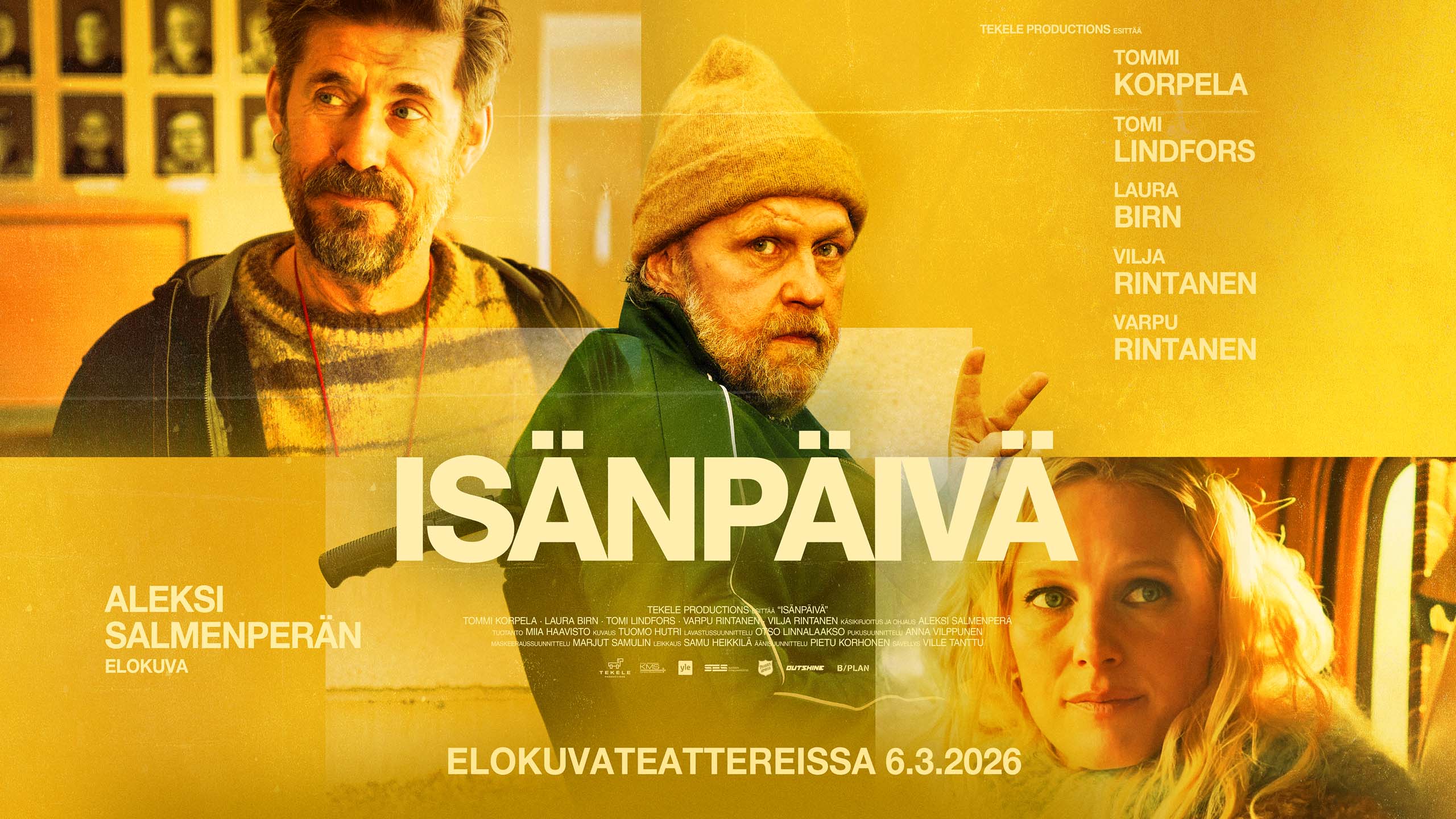
A recent Finnish film showcases real people and their struggles
Father’s Day is celebrated on 21 June in the UK, USA, Canada, France and India and several other countries. As we approach this date, we would like to celebrate a recent Finnish Film Isänpäivä (Father’s Day) which was released in March of this year.
Directed by acclaimed Finnish filmmaker, Aleksi Salmenperä, Isänpäivä is a darkly humorous, tragicomic drama starring Tommi Korpela as Veikko and Tomi Lindfors as Tinke. The story follows Tinke, an aging man coping with poor health and life in a care facility. His life is anchored by humour and his best friend, Veikko. However, there is an important casting element that makes this film uniquely special, All the World’s, Marina Ley found out more…
It is a question often asked at dinner parties or on first dates: who would you cast to play you in the film of your life? But what if, instead of choosing someone else, you played yourself?
That was the unusual scenario for several cast members of Isänpäivä (Father’s Day), a recently released Finnish film that features residents of a Salvation Army supported housing community telling a story rooted in a place they know intimately: home.
What makes Isänpäivä remarkable is that Lindfors is not simply portraying a resident of supported housing; he is one. Several other residents also appear in the film, playing characters whose lives closely mirror their own experiences.
The film premiered on March 6, 2026, in Finland and this honest and remarkably human film follows a web of interconnected lives. At its centre are twin teenage daughters seeking the identity of their estranged father, (seamlessly explaining the film’s title, Isänpäivä, which translates to Father’s Day), leading them to Tinke (Tomi Lindfors).

Scene from the film
Set in a Salvation Army supported housing unit in Pitäjänmäki, Isänpäivä follows the life of fictional character, Tinke, a resident of the housing unit, who has lived a tough life marked by alcoholism and ill-health, his friendship with Veikko (Tommi Korpela), a social counselor at the unit, and, perhaps helping to pinpoint the magic of the film, his real-life best friend of over 50 years.
What makes Isänpäivä remarkable is that Lindfors is not simply portraying a resident of supported housing; he is one. Several other residents also appear in the film, playing characters whose lives closely mirror their own experiences. It is a creative decision that lends the film a striking authenticity.
‘People with lived experience are often talked about, but their own voice is missing,’ says Riku Leino, Head of Communications for The Salvation Army in Finland. ‘Here, the residents bring something that cannot be acted: genuine presence, real humour and a story that is truly their own.’


Scenes from the film
More than actors
Residents of Pitäjänmäki were invited to take part voluntarily, with ten ultimately appearing in the finished film. According to Pasi Lehto, Manager of the housing service, the experience allowed residents to demonstrate talents and strengths that are not always recognised in everyday life.
This person-focused attitude is found in Finland’s supported housing model, Housing First (in which the Pitäjänmäki unit comes under) where an individual’s right to a home comes first, free from requirement that they quit any substances they may be using. 1 Ultimately, it is built on the belief that housing is a human right, and with this stable foundation, it becomes easier to transform one’s life.
Crucially, it is a film that follows everyday people, who are navigating their lives and certain struggles, whilst refusing to be defined by them.
Humanity without stereotypes
Isänpäivä is a quietly intricate film, exploring complex themes from family, friendship, and addiction with a raw and honest lens, an honesty that was born from the authenticity of its production. From casting real-life residents, allowing improvisation, and adapting the script to fit around Lindfors’ speech real-life impediment (there are moments in the script where Korpela ‘s character interprets Lindfors’ lines to other characters when his speech has been unclear 2), this neorealistic film has been beckoned as more of a documentary than cinema, a reaction that is welcomed by Salmenperä. 3
Amongst a pool of blockbuster depictions of addiction, single-parenthood and dysfunctional family dynamics, that tend to either demonise or glamorise these issues, Isänpäivä is a refreshing honest dramedy, that quietly honours moments of connection and humour amongst a backdrop of the raw reality of life’s hardships.
Crucially, it is a film that follows everyday people, who are navigating their lives and certain struggles, whilst refusing to be defined by them. The film urges audiences to look beyond what separates us and instead embrace what connects us. Whether or not someone has experienced addiction, strained family relationships or homelessness, the emotions and experiences of the characters remain deeply relatable, and universally human.
‘Substance abuse and mental health problems do not eliminate human needs such as closeness and friendship,’ says Lehto. ‘As in the film, the employee Veikko clearly highlights the importance of encounter and respect.’
Film can help people understand these issues in a way that facts and numbers alone cannot. When people see real everyday life on screen- the small moments, the humour, the setbacks, the friendships, it becomes harder to keep a distance.
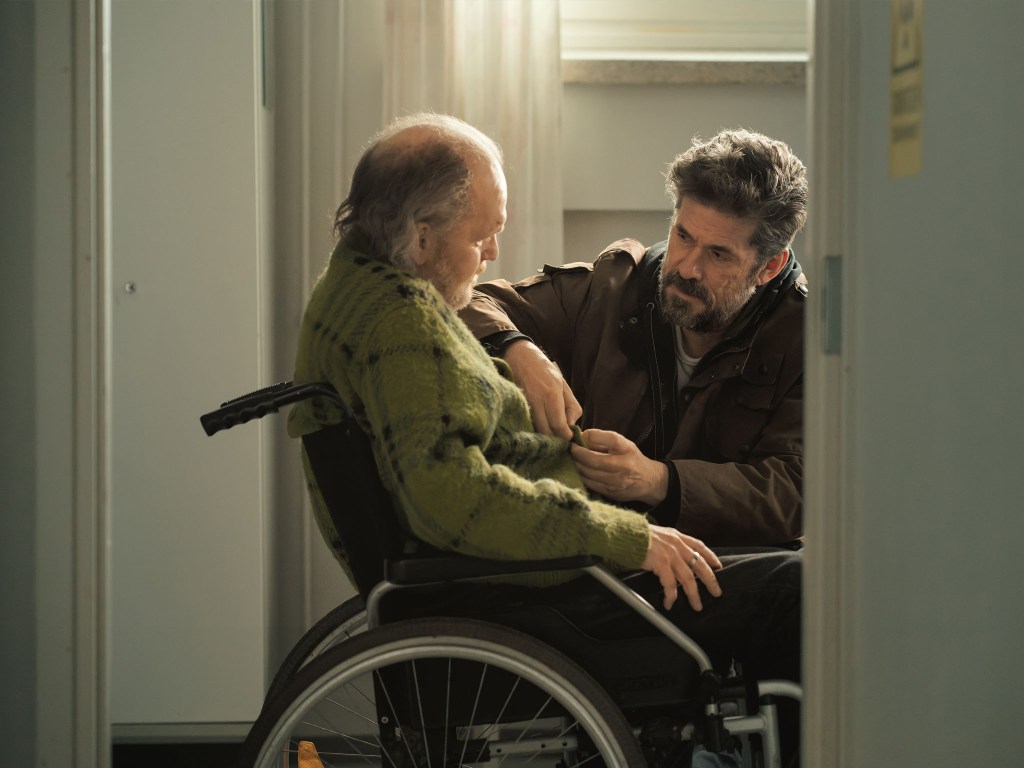
Tomi Lindfors (in the role of Tinke) with Tommi Korpela (acting as Veikko) in a touching moment in the film.
The Salvation Army’s role
The Salvation Army’s involvement was visible before, during and after filming.
According to Lehto, the real-life friendship of Lindfors and Korpela inspired the idea for Isänpäivä. Having worked with both actors before, Salmenperä visited the housing unit where Lindfors lives and decided to film in a near-identical set, heavily inspired by this setting, as well as using real props from the unit.
The Salvation Army also advised on the script to ensure its values and ethos were represented accurately.
‘Major Kati Kivistö’s role, as Communications Manager at the time, was to highlight The Salvation Army’s values and ethics and guide the use of the brand,’ explains Lehto. ‘The discussions were constructive and we quickly found trust and a shared understanding with the production team.’


Scenes from the film
Film as a catalyst for change
Stories have the power to shape how we see one another, and film can often reach hearts in ways that statistics cannot. ‘Film can help people understand these issues in a way that facts and numbers alone cannot. When people see real everyday life on screen- the small moments, the humour, the setbacks, the friendships, it becomes harder to keep a distance’ says Leino. ‘Stereotypes break down, and something like empathy takes their place.’
By encouraging the audience to explore the challenging themes raised in the film, thoughts about where one can put these thoughts into action might arise, perhaps naturally pointing towards organizations like The Salvation Army and shining a light into the very real, and relevant work it undertakes to tackle such issues.
It is an opportunity to reflect on our own attitudes and values in an increasingly polarised world. The film gives a stark yet beautiful glimpse into the hopes, expectations and inner lives of people who are often overlooked.
Film can challenge assumptions and humanise issues that are too often reduced to headlines or stereotypes. As Lehto points out, many people assume residents in supported housing are solely responsible for their circumstances, when the reality is often rooted in decades of exclusion, trauma and disadvantage. ‘Isänpäivä can encourage viewers to consider the stories behind people living on the margins of society,’ he says. ‘It is an opportunity to reflect on our own attitudes and values in an increasingly polarised world. The film gives a stark yet beautiful glimpse into the hopes, expectations and inner lives of people who are often overlooked.’
A story that belongs to everyone
Films that do not shy away from honest depictions of life affected by addiction are a rare treat for audiences. Produced in a country marked by fluctuating public attitudes and policy changes towards alcohol, fears loom over proposed cuts to health and preventive services. 4 Along with this, the social stigma that exists around addiction (and can act as a barrier to accessing help) 5 maintains secrecy and shame.
This context makes the film’s original working title, Takahuone (‘Back-room’), particularly poignant. The title operates on several levels: evoking decisions made in the back rooms of power, often without the voices of those most affected being heard, while also reflecting how people struggling with addiction can be pushed into the margins; the figurative back rooms of society, hidden from view.
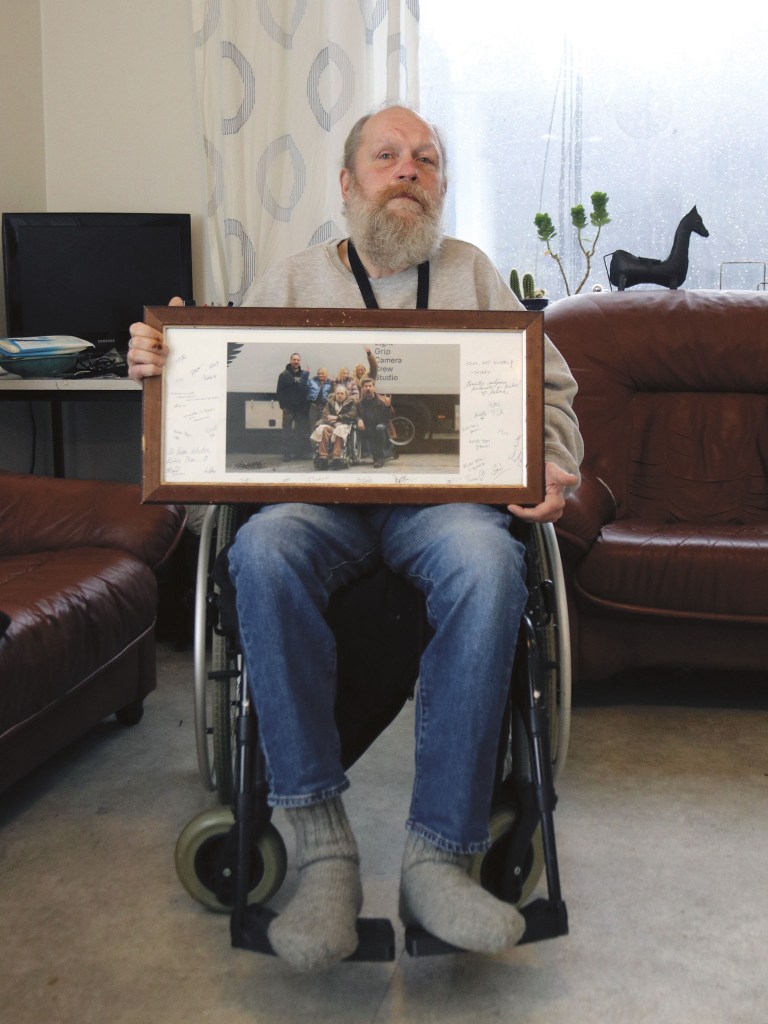
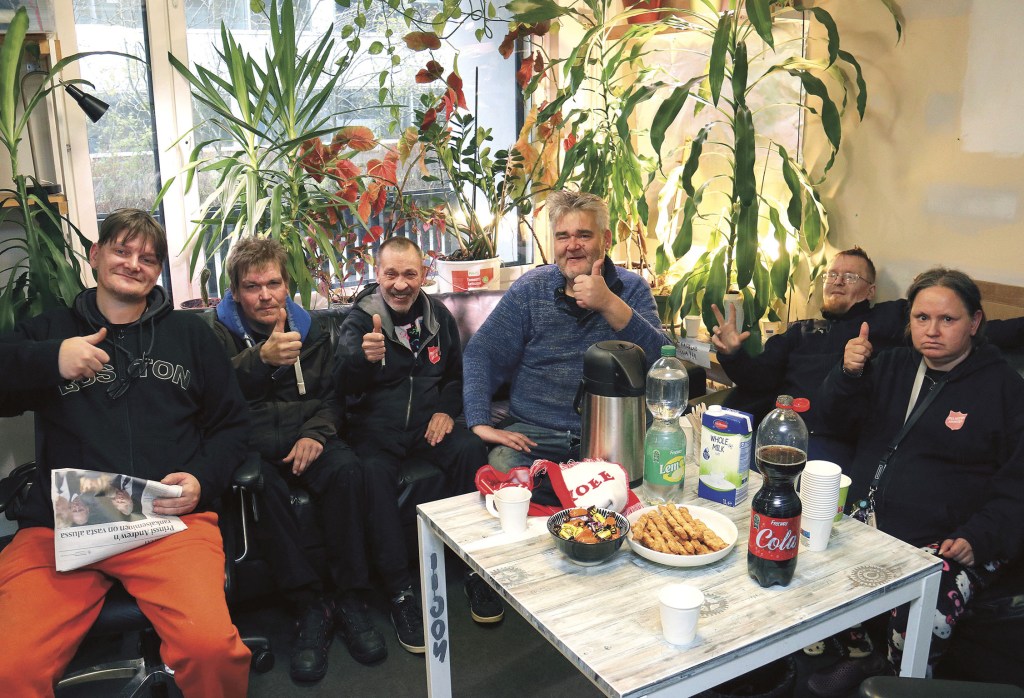
From left: Tomi Lindfors with a photo of the film production team; real life personnel at the Salvation Army care facility.
Against this backdrop, the film demonstrates the power of placing real people at the heart of real stories. For many of those involved through The Salvation Army, it was more than a film production. It was an opportunity to be seen, valued and included. It begins with a film, but its impact is measured in lives touched and lives changed.
At present, Isänpäivä (Father’s Day), is only available to view in Finland. However, it is expected to be released on streaming services available in other countries including the UK, later on in the year.
FOOTNOTES
- First – Pelastusarmeija ↩︎
- Tomi Lindfors is one of the stars of Aleksi Salmenperä’s new film | Culture | Yle ↩︎
- ISÄNPÄIVÄ – A LIFE-LIKE FILM ABOUT GETTING BY (Sotahuuto article) ↩︎
- Finland: EHYT Advocates For Government to Improve Taxation, Prevention, Health Promotion – Movendi International ↩︎
- Full article: Everyday resistance within the context of the Finnish welfare service system from the standpoint of older women with a history of harmful substance use ↩︎

You must be logged in to post a comment.