

We organise our lives around season, stages and the idea of the ‘right time’. But what happens when those familiar markers begin to disappear? Samuel Shearer reflects on change, uncertainty and learning to trust God’s timing.
I have a deep dislike of platitudes and adages, those sayings or proverbs meant to convey wisdom and truth. The reason is simple: I don’t like the concealment of meaning or a lack of clarity.
In my experience, the use of an idiom or adage can confuse a simple point rather than clarify it. They often mean different things to different people. We should say what we mean and mean what we say, or at the very least update some of our older sayings so they speak to the world we live in now.
‘A stitch in time saves nine’ means almost nothing in a world where fewer people know how to sew and fast fashion has reduced the desire to mend, repair and maintain rather than simply buy more.
We once lived more closely by the turning of the seasons, but many of the boundaries that shaped our lives have blurred.
Did you know that studies suggest the early bird does not, in fact, always get the worm, because many predatory birds hunt in the afternoon or evening?
‘Blood is thicker than water’ is quite literally true in terms of density. In common usage, though, the saying has come to suggest that family bonds supersede all others. There is even a later variation, ‘the blood of the covenant is thicker than the water of the womb’, which turns that familiar meaning on its head and suggests that chosen bonds can be stronger than those of family.
Throw in the fact that idioms and adages don’t always translate well in a global world and you have a recipe for confusion.
I’d be quite keen to throw out these sayings altogether.
Which brings me, somewhat convolutedly, to my central point.
With your permission, I would like to submit another adage to the scrap heap: ‘For everything there is a season.’
Not because I do not believe it. It’s biblical, reasonable and practical. Rather, I think we have lost something of the meaning of the word ‘season’.
Ecclesiastes 3:1-8 tells us:
There is a time for everything,
and a season for every activity under the heavens:
a time to be born and a time to die,
a time to plant and a time to uproot,
a time to kill and a time to heal,
a time to tear down and a time to build,
a time to weep and a time to laugh,
a time to mourn and a time to dance,
a time to scatter stones and a time to gather them,
a time to embrace and a time to refrain from embracing,
a time to search and a time to give up,
a time to keep and a time to throw away,
a time to tear and a time to mend,
a time to be silent and a time to speak,
a time to love and a time to hate,
a time for war and a time for peace.
When we were younger, the concept of a season perhaps made more sense. Our lives were governed by seasons, both natural and human made.
We were carefully guided by school terms. Our ideas of learning versus play and growth versus relaxation were governed by predetermined passages of time. Frustrating as it could be, there was also something comforting about being told, ‘When you’re older…’, ‘When you’re at university…’ or ‘When you have children of your own…’ because it suggested there were set times for things.
Unfortunately, we are grown.
‘When you’re older’ is now. For some of us, it has come and gone. We have moved beyond those socially agreed time stamps and towards the question: ‘If not now, then when?’
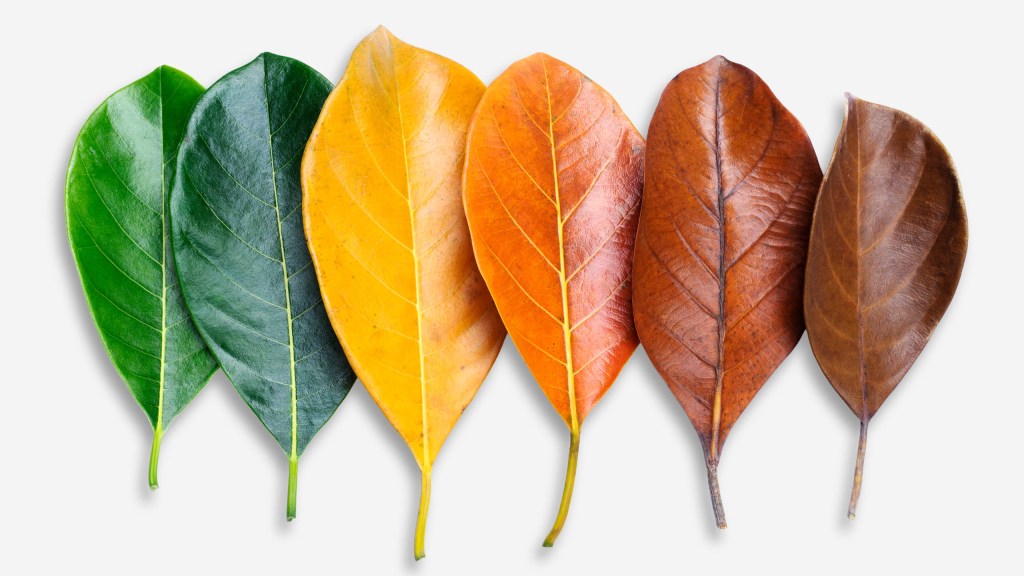
Literal seasons, too, have changed.
It is impossible to ignore the impact of climate change. In many parts of the world, familiar seasonal patterns are becoming less predictable. What is the meaning of summer when temperatures are already soaring in spring? What is winter when the rains do not come to restore scorched land? What does spring’s promise of new life look like when extreme weather threatens homes, crops and livelihoods?
We once lived more closely by the turning of the seasons, but many of the boundaries that shaped our lives have blurred.
In wealthier parts of the world, modern agriculture and global supply chains mean we can access much of the same food all year round, while elsewhere farmers can face repeated failed harvests as weather patterns become increasingly unreliable.
Even the summer blockbuster season has shifted, with major cinema releases appearing throughout the year. And the other meaning of the word ‘season’ has changed too. Streaming platforms mean we no longer necessarily tune in week by week for a television series. Instead, we can watch an entire season at once. We decide when and how much.
Perhaps ‘for everything there is a season’ can become a call to rely on God to guide us towards the when, where and how of the things that confuse, concern or delight us.
Simply put, for better or worse, things no longer always seem to happen in their own time. They happen in ours.
I have realised that I have spent a large portion of my adult life waiting for the right season.
Waiting until I get older. Waiting until I get wiser. Waiting for that elusive, predestined moment when I would finally feel like a ‘grown-up’.
I learned recently from my mother that this moment may never come.
‘No one feels adult enough to do the things they must,’ she told me when I asked her about making difficult choices. ‘They just do them.’
Inspired by this, I wonder whether, instead of being led by seasons that no longer seem quite so clearly defined, we might repurpose the old adage.
Perhaps ‘for everything there is a season’ can become a call to rely on God to guide us towards the when, where and how of the things that confuse, concern or delight us.
The seasons fade and we outgrow the time stamped guardrails of youth. But God is unchanging. Divine timing is not so easily disrupted by human error.
God is eternal. The Holy Spirit’s sense of when is beyond ours.
God is all-knowing and can help us discover how.
God is present everywhere and will be with us no matter where we go.
For everything, there is God’s season.

You must be logged in to post a comment.