
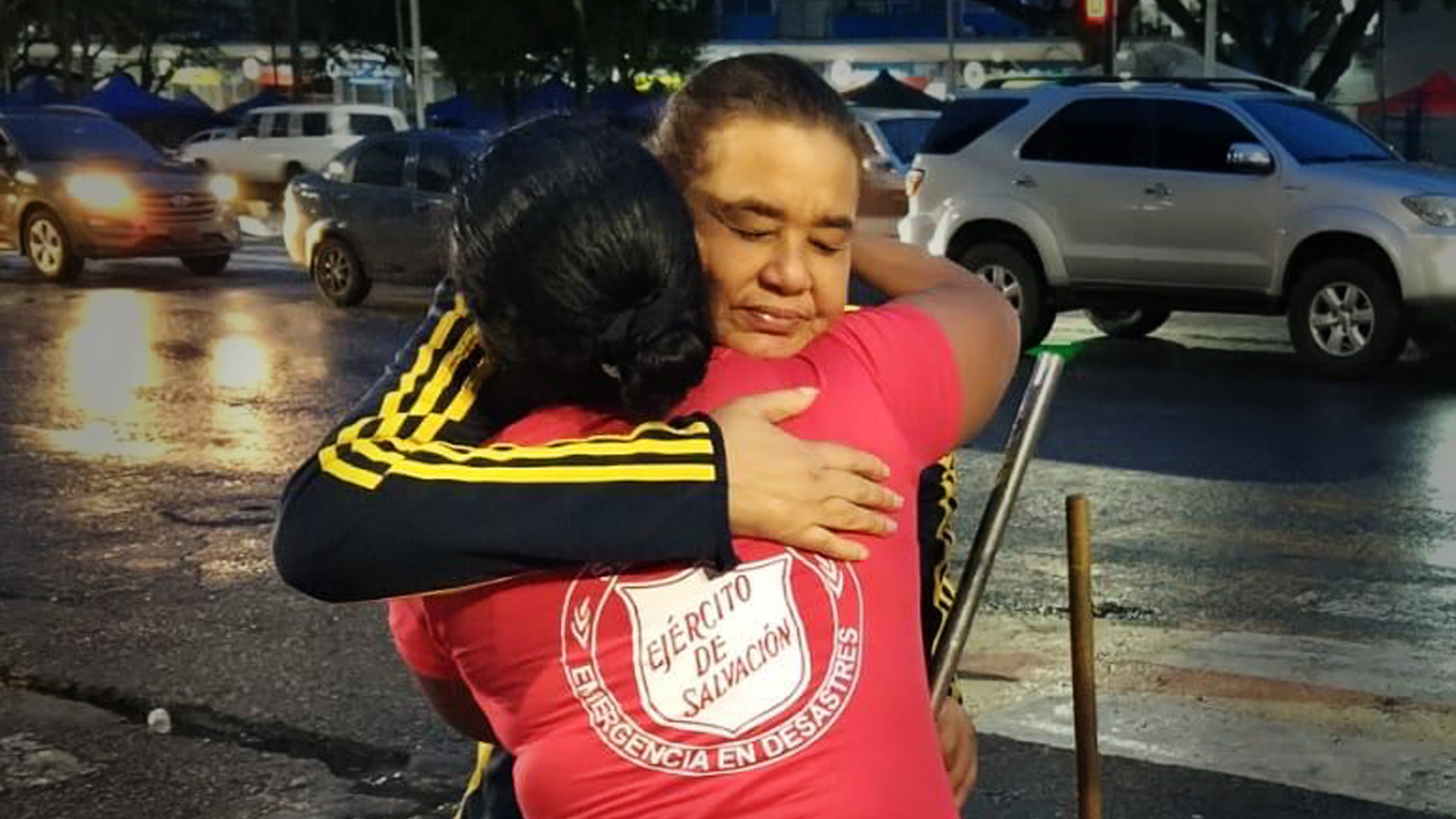
From earthquakes to floods, Salvation Army teams are discovering that some of the most important work begins after the world’s attention has moved on.
From the Philippines to Indonesia, Venezuela and Japan, Salvation Army teams have responded to a succession of devastating earthquakes. Colombia followed. Now, as communities continue to live with the aftermath of those disasters, another emergency has unfolded in Nepal and Tibet. Behind the statistics are people whose lives changed in seconds, and responders who remain alongside communities long after the news cycle has moved elsewhere.
Thirty-nine seconds. That is how Freddy measures the moment his world changed. ‘That day really changed our lives in La Guaira, in 39 seconds,’ he says. ‘It was something truly awful. I can’t even describe it.’
Freddy lives in Venezuela, where two powerful earthquakes struck less than a minute apart on 24 June. According to official figures, at the time of writing, at least 6,500 people had died, almost 61,000 had been hospitalised and tens of thousands had been displaced. But those numbers cannot explain what an earthquake means to one family.
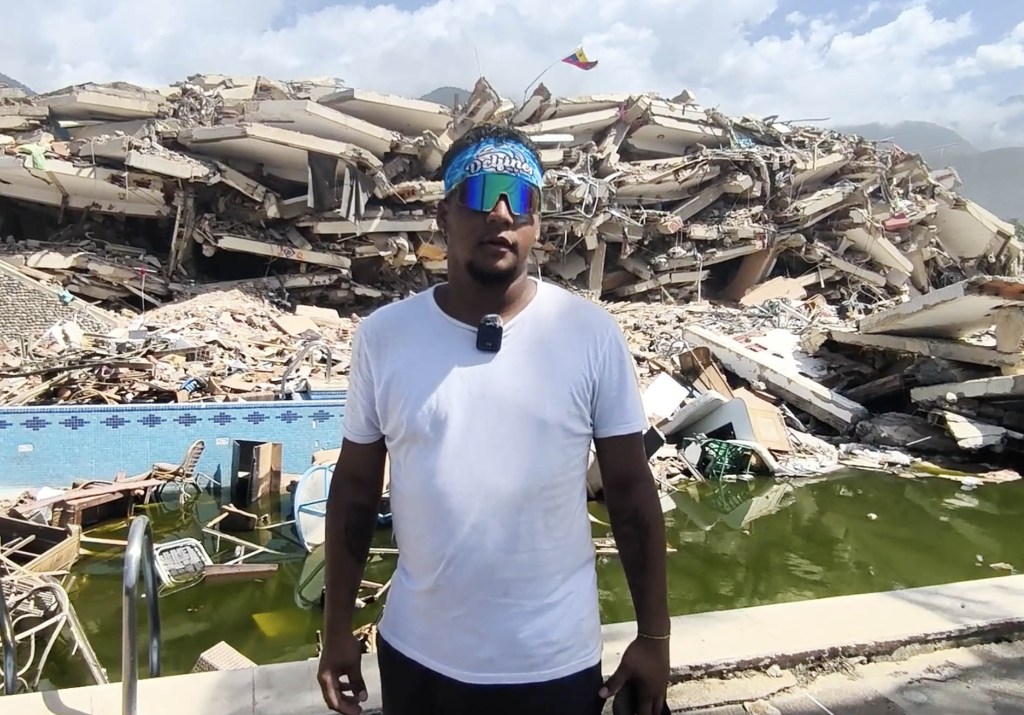
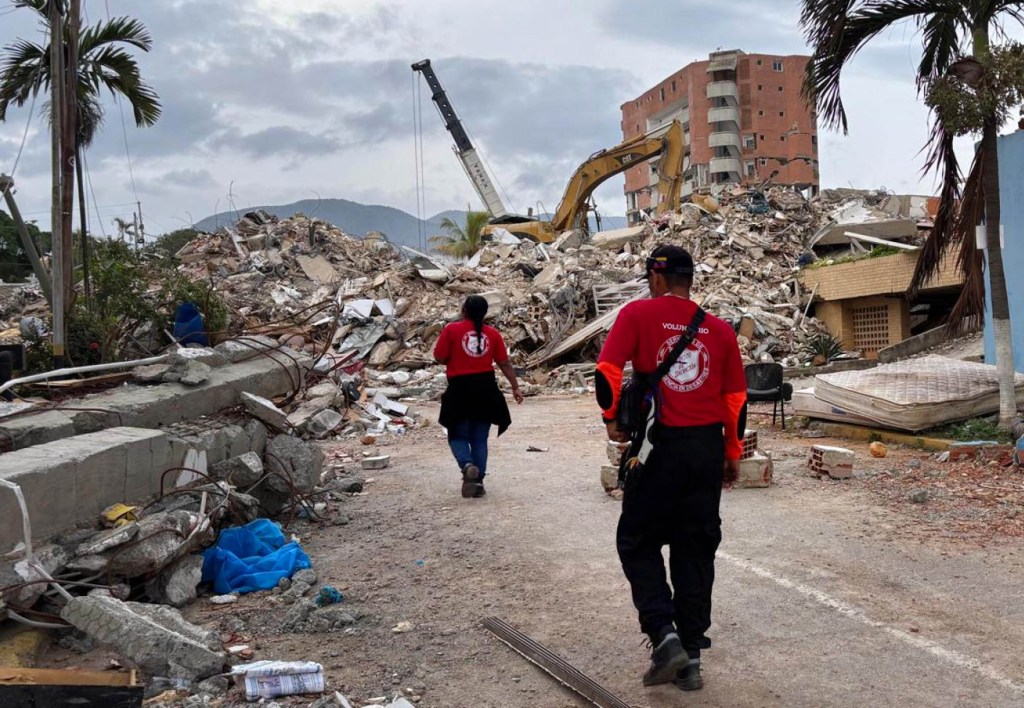

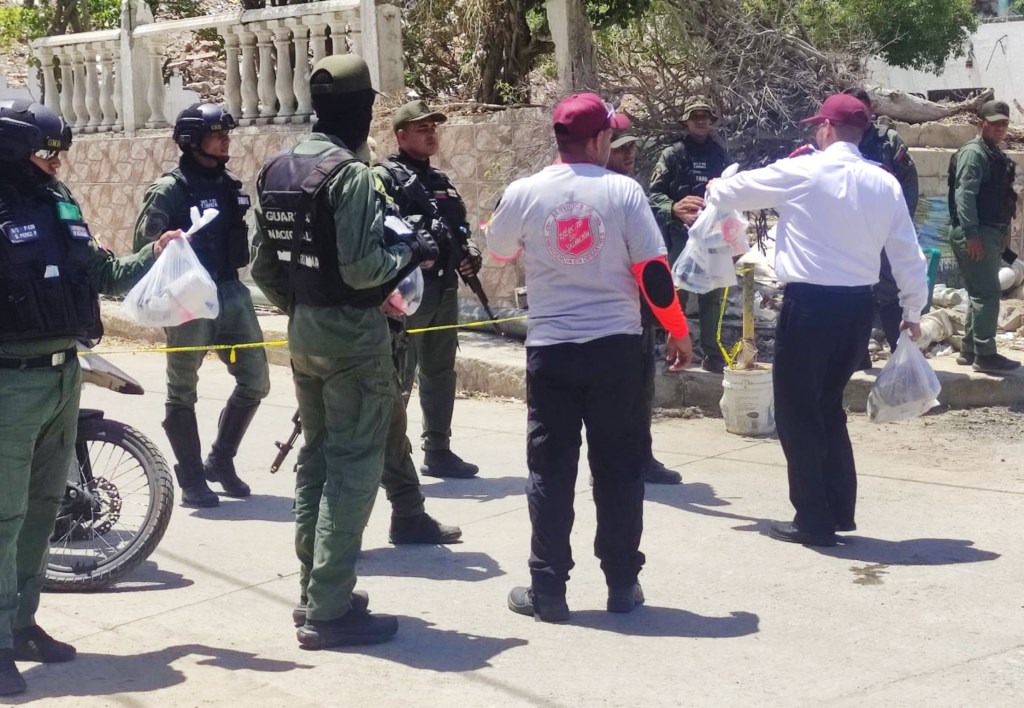
From left: Freddy by the collapsed building where he lost family members; Salvation Army teams responding to the earthquake in Venezuela, 2026.
For those affected, of course, there is no equivalent moment when the emergency simply ends. A television crew can leave. A news alert disappears from a phone. But a family still needs somewhere to sleep that night. Someone still needs clean water. A road still needs clearing. A frightened child still needs reassurance.
Freddy is helping to clear rubble. His family has already lost two people. Three more, including a six-year-old girl, remain missing. ‘We’ve tried to locate them. We’ve crawled into a hole, we’ve dug tunnels, we’ve searched the basement and unfortunately, we haven’t found them,’ he says. His search continues.
After the news alert
Beginning with the Philippines on 8 June, Salvation Army teams have responded to major earthquake emergencies in five countries in little more than two months: the Philippines, Indonesia, Venezuela, Japan and Colombia. Each became breaking news. Each generated statistics, images and headlines and then international attention moved elsewhere.
For those affected, of course, there is no equivalent moment when the emergency simply ends. A television crew can leave. A news alert disappears from a phone. But families and communities still need to rebuild and heal. They still need a network of support for both physical and emotional needs.


Salvation Army teams helping communities in the Philippines after a major earthquake.
Supporting families affected
The first priority of The Salvation Army is always to respond to those affected with items selected to meet current needs. Targeted assistance is based on supplying what people need, depending on where they are and what has been lost or damaged. When a magnitude 7.8 earthquake struck Mindanao in the Philippines on 8 June, 65 people were reported to have died, more than 1,400 were injured and hundreds of thousands were affected. 900 families who had suddenly lost homes and possessions each received 10 kilograms of rice, drinking water, groceries and sanitation and hygiene supplies.
Eight days later, a magnitude 6.7 earthquake struck Central Sulawesi in Indonesia. There, the continuing aftershocks created a different challenge. Some homes were cracked or partially collapsed. Families whose properties had escaped serious damage chose to sleep outside because they feared the ground would move again.
That ability to listen first and respond to the actual situation, rather than arriving with assumptions about what people ought to need, runs throughout the work of International Emergency Services.
‘There are so many aftershocks that make it even more tense,’ reported one of the Salvation Army’s emergency officers. Families constructed emergency tents near their homes because they were too frightened to return inside.
The Salvation Army began provided basic foods, ready-to-eat meals and temporary shelter, including tents. Woodward Hospital, The Salvation Army’s general hospital in Palu, was also available to support the response.
And the need has not ended. Captain Leo Siwi says that The Salvation Army is continuing to support community members who remain displaced while communities and government authorities work towards more lasting solutions. ‘A lot of people are talking about being in this together,’ he says. ‘And that is what we are seeing.
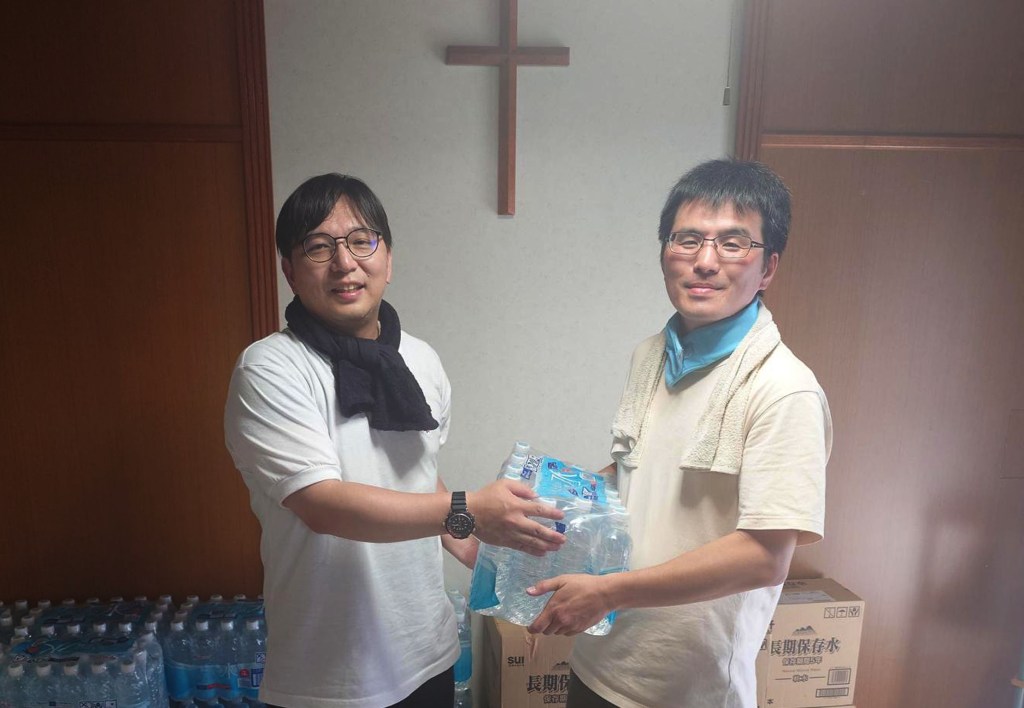

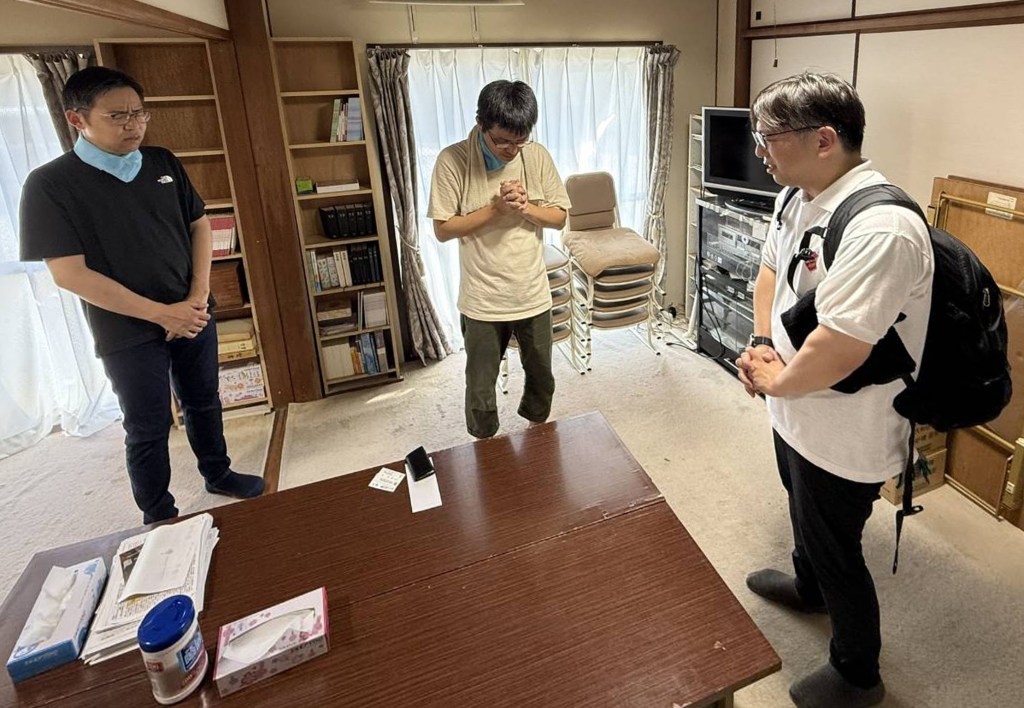
From Left: supplies of water and other emergency items reach a church in the southern part of Kumamoto City, ready for distribution; team members pray together at a site of earthquake disaster, in a church in Kumamoto; Mr.Tamotsu Yoshida, Superintendent at the Aikoen Children’s home, organises emergency supplies.
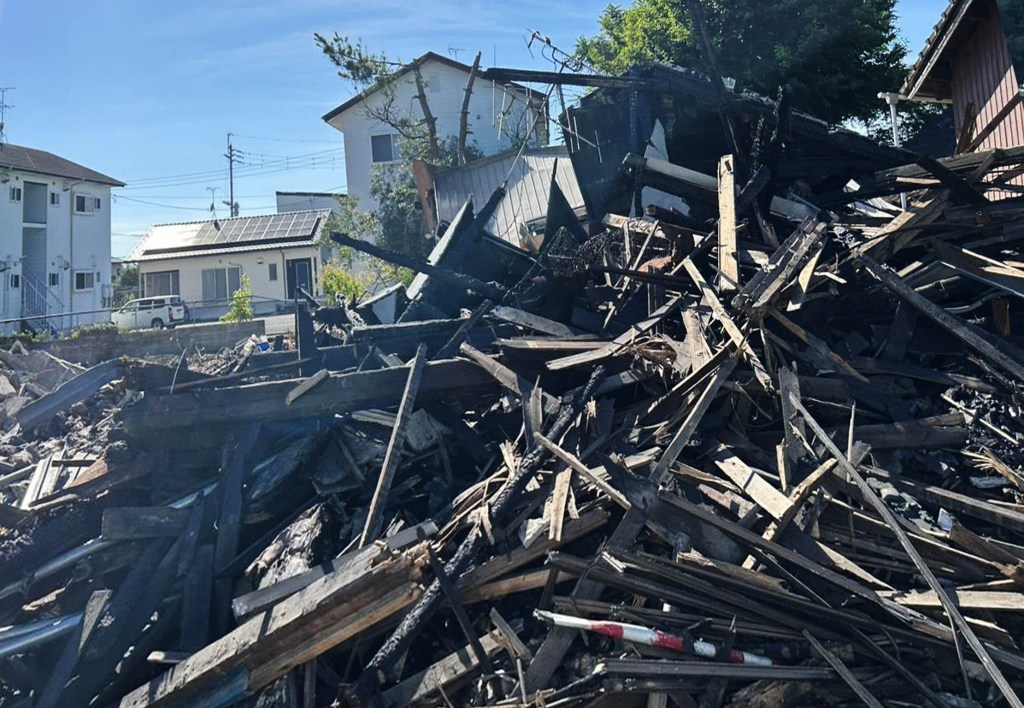
A Japanese traditional-style house is totally destroyed in the earthquake.
An emergency inside an emergency
When a magnitude 7.1 earthquake struck the Kumamoto region on 28 July, more than 10,000 people were evacuated to 415 shelters.
But authorities were dealing with more than earthquake damage as Japan was experiencing intense summer heat. Power outages affecting almost 23,000 households meant that some evacuation centres were unable to use air conditioning.
The response changed accordingly. Drinking water, towels, wipes, hygiene products and packaged rice meals were transported into Kumamoto. Further assessments led to noodles, nappies, sanitary products, tarpaulins and additional water alongside generator fuel, microwaves, portable toilets, cooling fans and storage batteries. In the evacuation centres without power during extreme heat, they made an enormous difference.
The ability to listen first and respond to the actual situation, rather than arriving with assumptions about what people need, runs throughout the work of International Emergency Services.
Nobody does this alone
Another theme emerges from effective response: partnership. The familiar image of humanitarian response is often of an organisation arriving to help. However, the reality is much more collaborative. Governments, local authorities, churches, community organisations, charities, volunteers and residents themselves each hold pieces of the response.
In the Philippines, existing relationships with local authorities and community leaders helped Salvation Army teams connect quickly with those managing temporary camps. Together they identified priority needs and worked to avoid duplicating assistance already being provided.
Behind every distribution, then, is a chain of people. Someone gives. Someone transports. Someone assesses. Someone drives. Someone opens a church door. Someone cooks. Someone carries a box. Eventually, that box reaches someone who needs it.
In Indonesia, teams worked alongside the national disaster response system, while police and military personnel helped make roads and bridges safe and accessible. Salvation Army officers at territorial, divisional and local level also worked together. Leo’s description of being ‘in this together’ stretches further still, encompassing territorial headquarters, supporting territories and offices, and International Headquarters.
In Japan, the response involved the Kyushu Christian Disaster Relief Centre and a wider network of churches and denominations. Kawajiri Church of the Assemblies of God became a hub where relief supplies could be collected, coordinated and distributed.
And in Venezuela, partnership became particularly tangible.


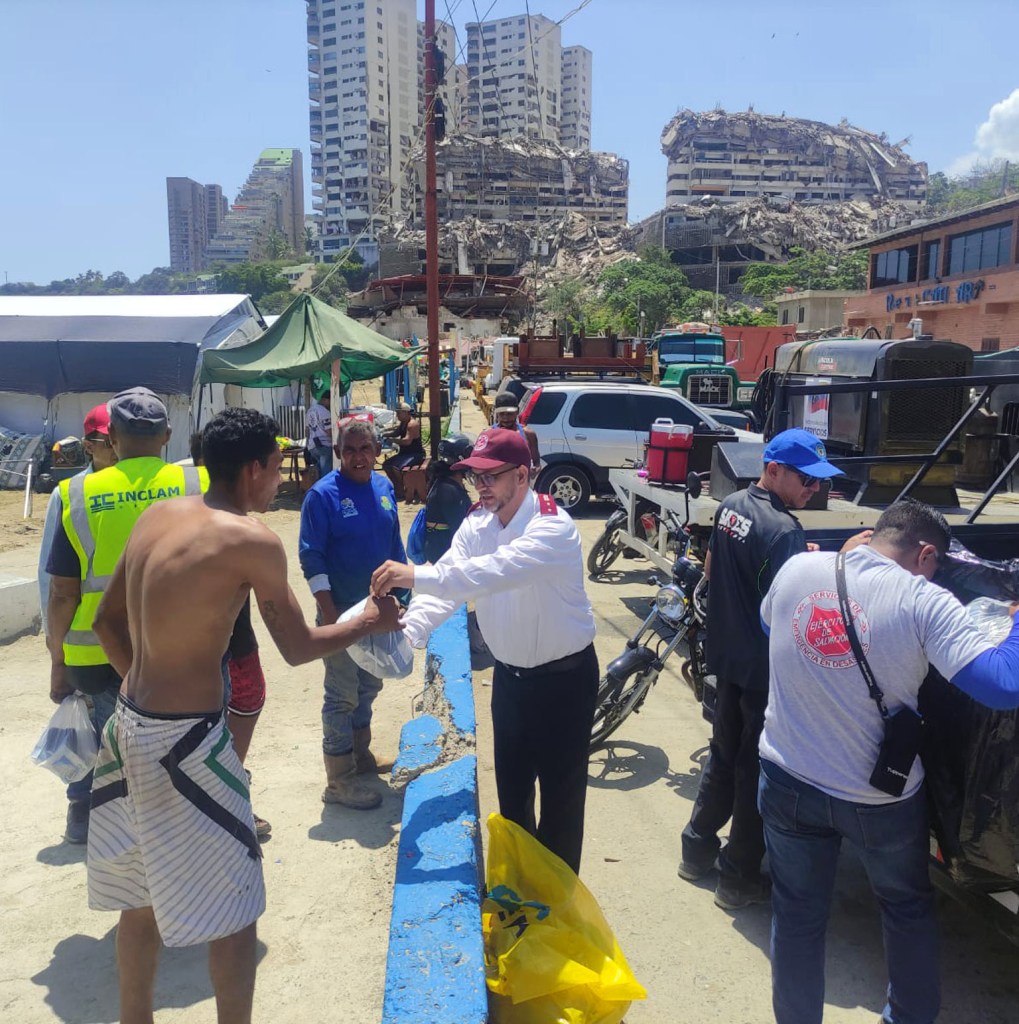
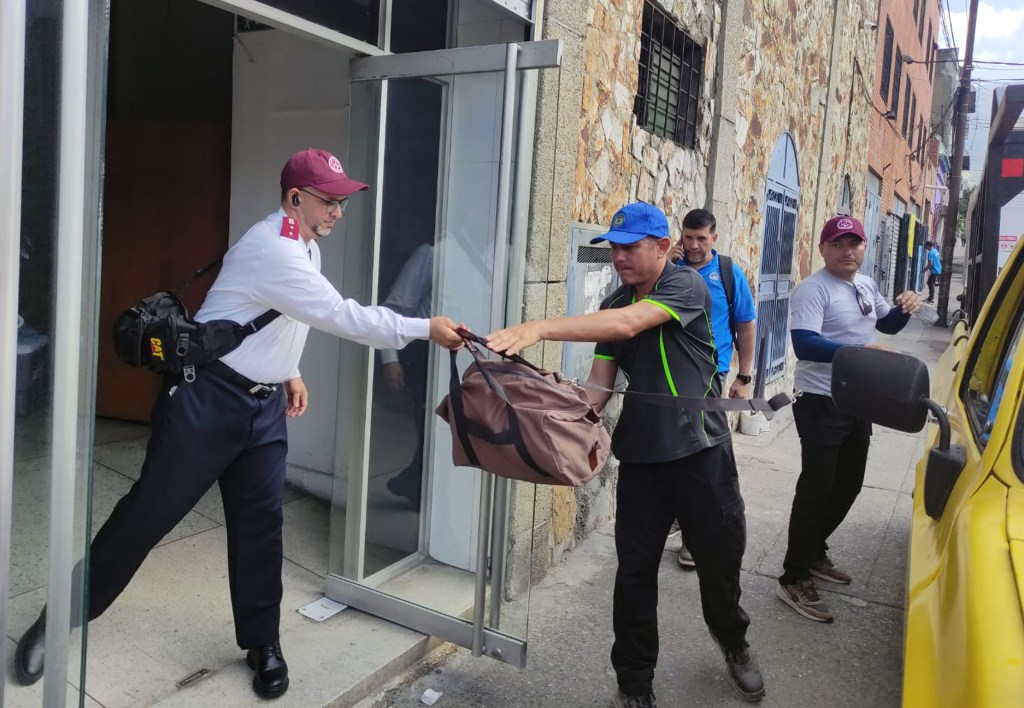
The Salvation Army works in partnership with other organisations in responding to the earthquakes in Venezuela.
A church floor and a borrowed vehicle
The Salvation Army team responding in Venezuela connected with the Ministerio Apostólico Internacional Emanuel church in Caracas opened its doors. Its floor became sleeping quarters. Church members provided meals, shared an internet connection and the use of a vehicle. Pastor Gerson Hernández had experienced the earthquake himself. He was at home with his wife and daughter when the tremors came. ‘We thought the house was going to collapse on us,’ he remembers. Within 24 hours, however, he was working with other pastors in La Guaira to meet basic needs. The area then went without electricity for three days. ‘The Salvation Army have worked with us unconditionally,’ he says. ‘There are very good testimonies of God’s mercy, but also painful testimonies.’
Disaster response is about far more than delivering relief,’ he says. ‘It is about restoring dignity, offering hope and demonstrating God’s love through compassionate action.
International partnerships expanded what was possible in the relationship. Through The Salvation Army World Service Office, Airlink provided international flights and freight transport, while Greater Good donated more than nine pallets of new goods and clothing.
Behind every distribution, then, is a chain of people. Someone gives. Someone transports. Someone assesses. Someone drives. Someone opens a church door. Someone cooks. Someone carries a box. Everyone works together to ensure that supplies reach the people who need them.
‘They have always been there’
By August, The Salvation Army’s Venezuela response had reached 7,134 people.
Teams had provided 3,116 meals, distributed 1,006 food parcels and supplied 1,387 hygiene, cleaning and essential-care kits. Basic medicines, mattresses, pillows, bedsheets and clothing were among the other assistance provided. Emotional care and spiritual support formed part of the response.
But Freddy does not describe the response in numbers. He describes people turning up. ‘I’m truly very grateful to The Salvation Army,’ he says. ‘They have truly supported us since day one. They have always been there for us.’ Water matters particularly to those clearing rubble under the fierce La Guaira sun. ‘Inside that rubble, it’s extremely difficult,’ he explains. ‘But thanks to them, the support is always there.’
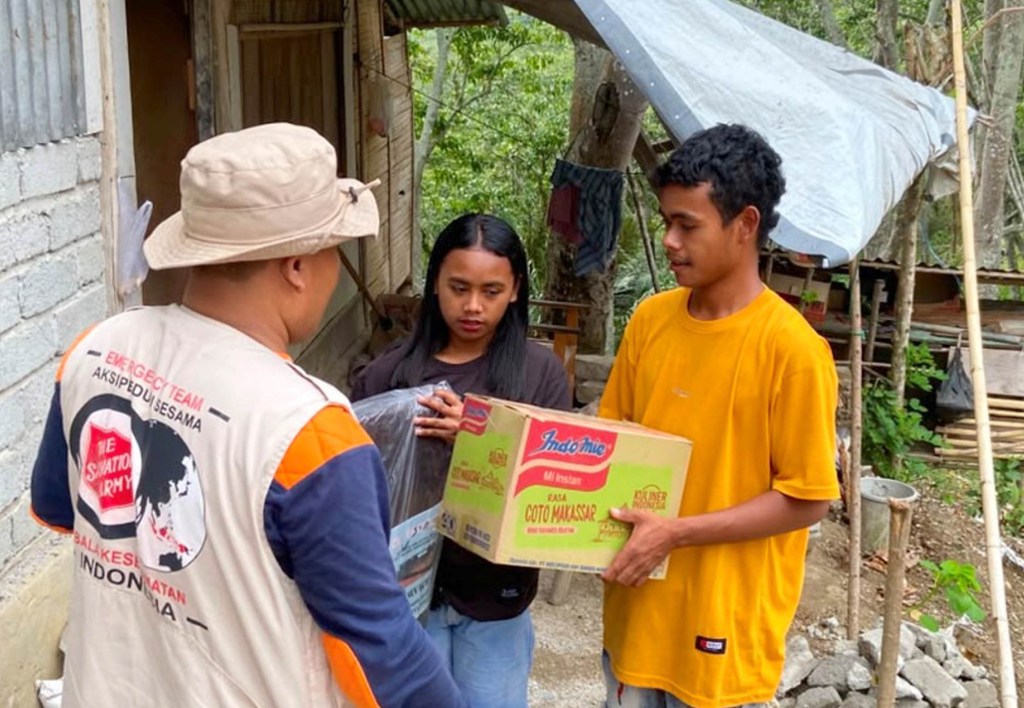

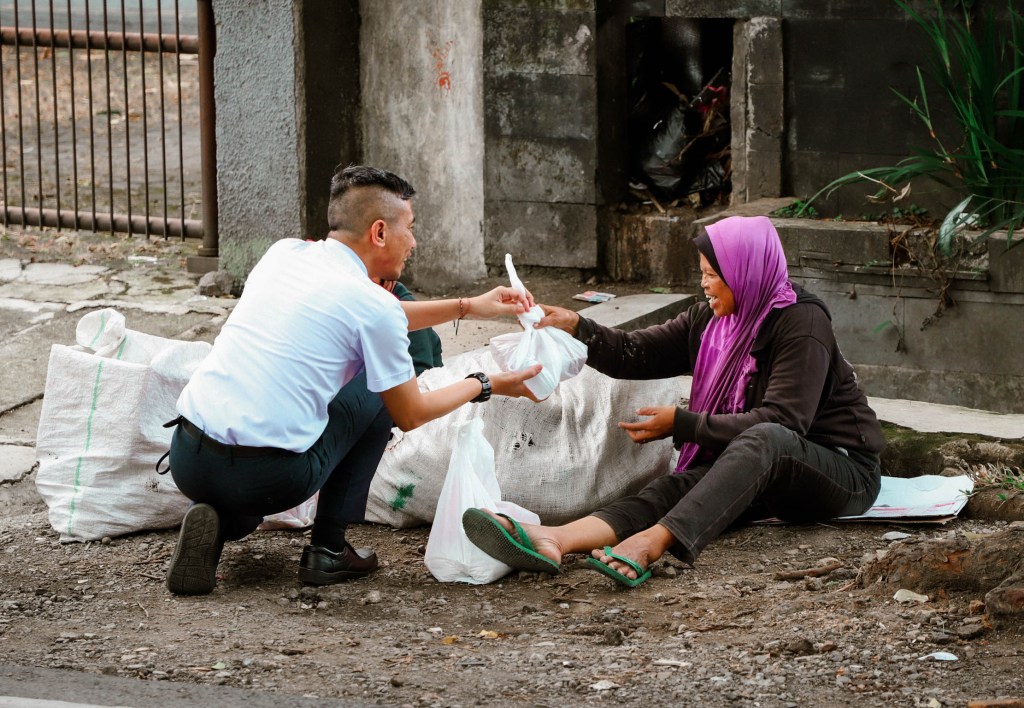
From left: Salvation Army team members distribute emergency food supplies to needy families in Indonesia; Captain Leo Siwi at a conference in the UK; Leo Siwi hands out emergency food supply to someone affected by the disaster.
Hope without conditions
Captain Leo Siwi, serving in the Indonesia response, puts another principle simply. ‘The Salvation Army does not distinguish between Christians and non-Christians. We help anyone in a community affected by disaster.’ For him, practical service is itself an expression of faith: ‘It is really good to be able to share the love of God without preaching the word.’
Captain James-Mark Casidsid, Territorial Emergency Service Coordinator for the Philippines Territory, expresses the same idea in a different way. ‘Disaster response is about far more than delivering relief,’ he says. ‘It is about restoring dignity, offering hope and demonstrating God’s love through compassionate action.’
That is where emergency response becomes more than a transaction between somebody who has supplies and somebody who does not. More than provision of items needed, presence can also show those affected: you matter, and you have not been forgotten.
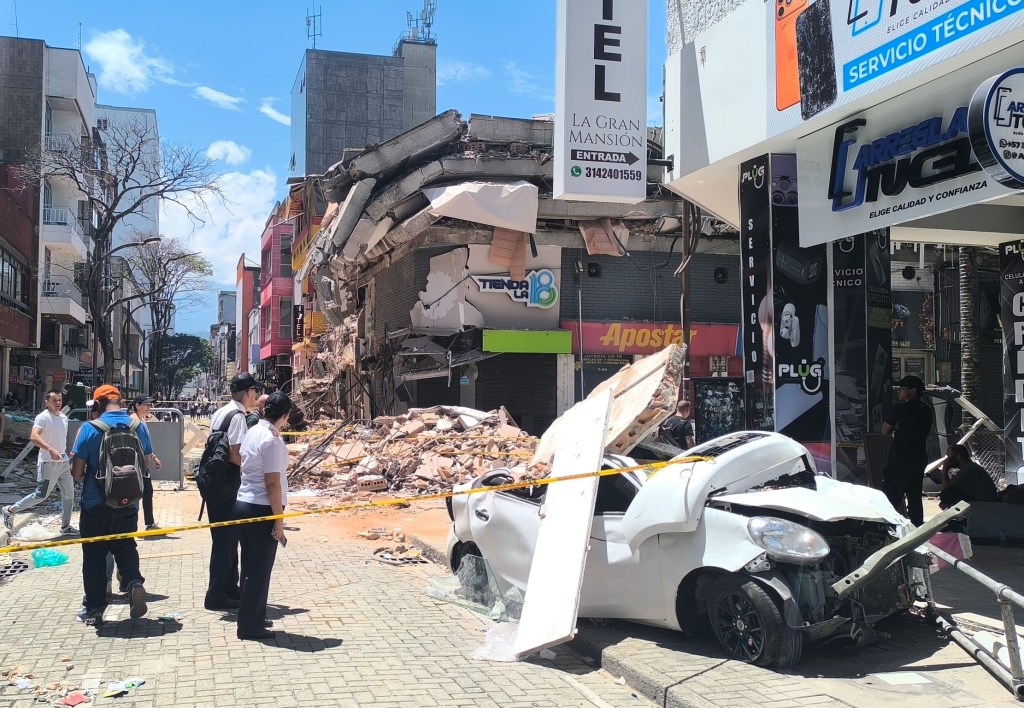
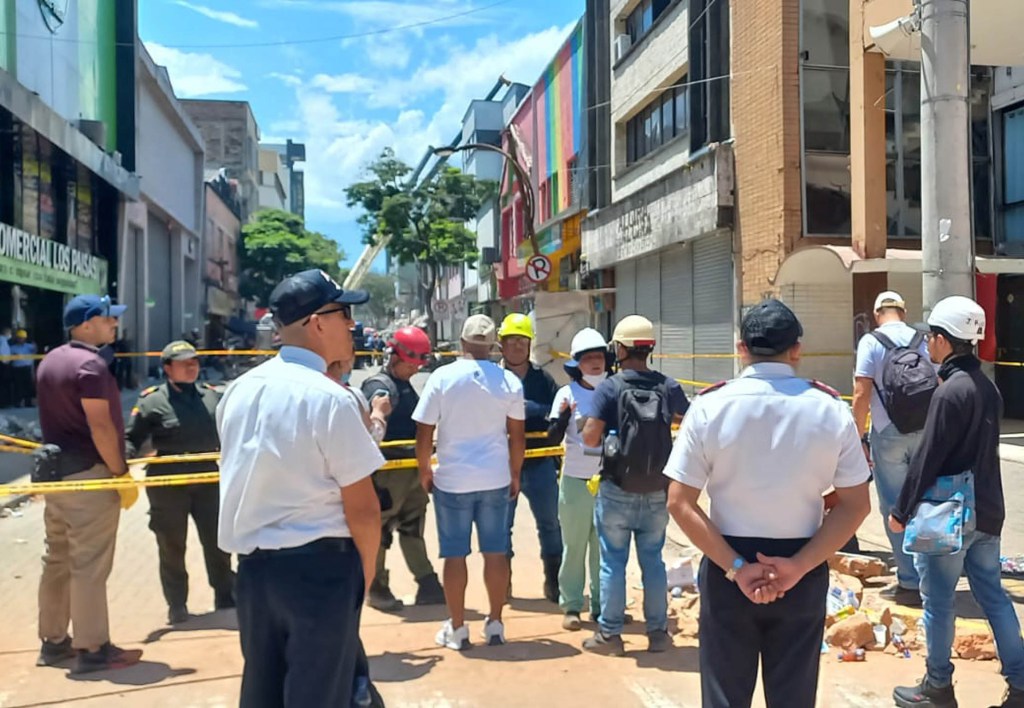
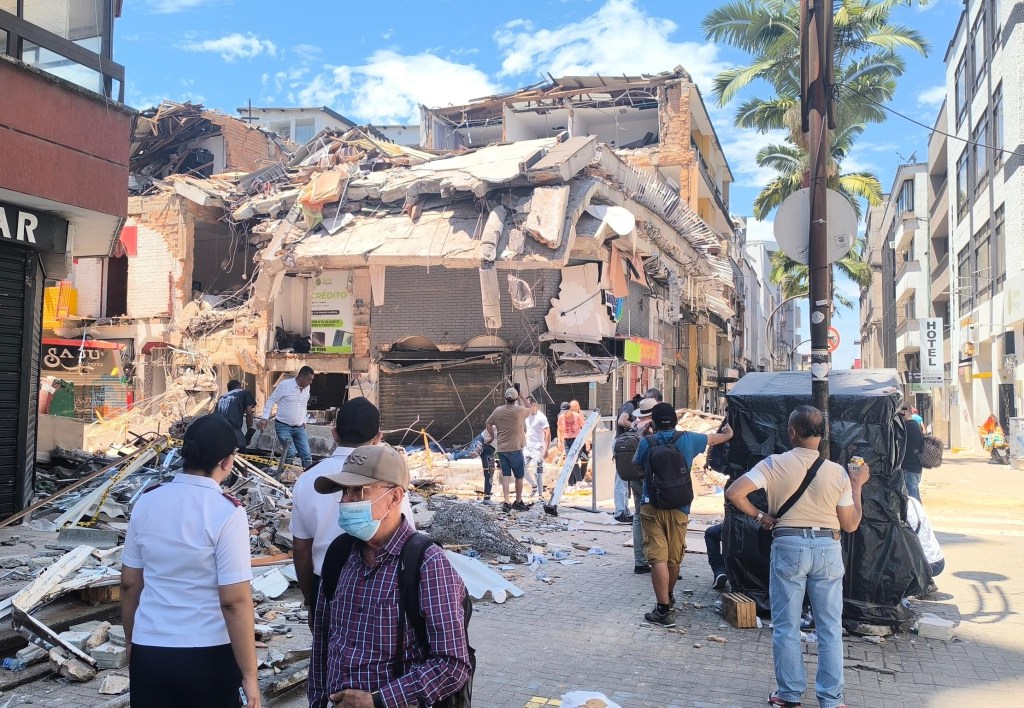
Responding to devastating earthquake damage in Colombia
And still the emergencies come
Even as Salvation Army teams continued their work in the Philippines, Indonesia, Venezuela and Japan, another disaster struck.
At 07:34 on 10 August, a magnitude 7.4 earthquake was felt across several Colombian cities, including Bogotá, Pereira, Manizales and Buenaventura. At the time of writing, at least 312 people had been killed and thousands affected. The Salvation Army’s Latin America North Territory completed a needs assessment and began preparing a response for 300 families, providing essential food, hygiene items and shelter support.
Then, on 26 August, catastrophic flooding swept through communities in Nepal and Tibet following an ice avalanche in the Himalayas. Villages and vital infrastructure were destroyed, and search-and-rescue operations began across an extraordinarily difficult landscape.


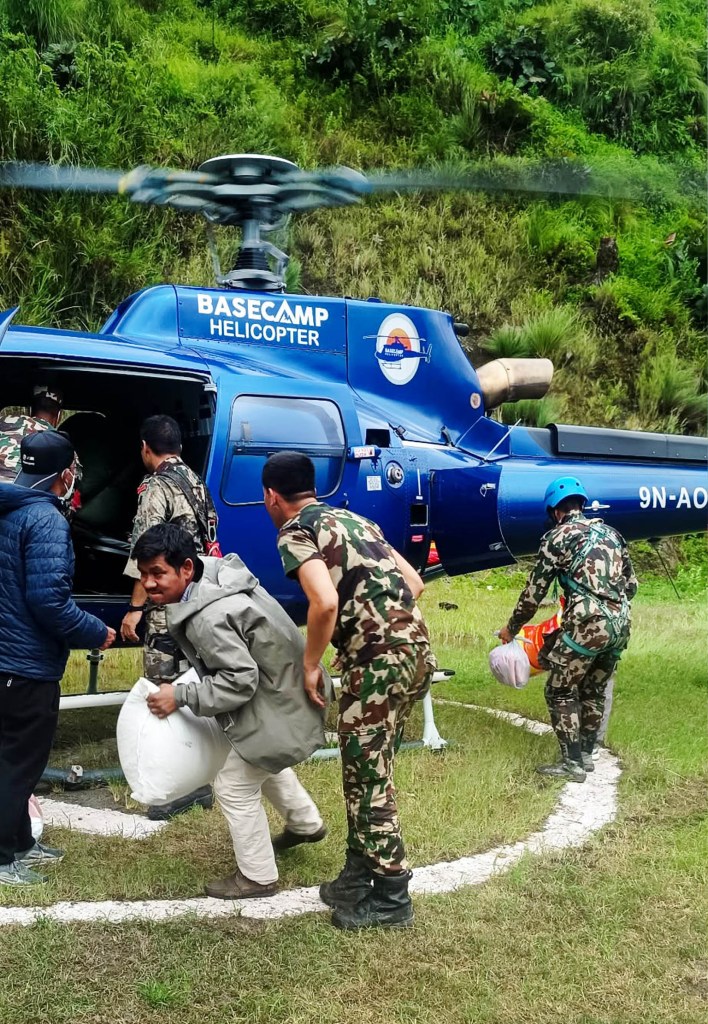
Responding to floods in Nepal
There will always be an understandable urgency around the first hours of a disaster. We want to know what happened, how many people were affected and what help is reaching them. But perhaps some of the most important stories happen afterwards.
Two days later, General Lyndon Buckingham expressed the solidarity of the worldwide Salvation Army with all those affected. ‘With deep sorrow, The Salvation Army around the world stands in solidarity with the people of Nepal and Tibet (China),’ he said, calling Salvationists and others around the world to pray for those who had lost loved ones and livelihoods, as well as for those involved in the response.
The Salvation Army is now preparing to support the wider humanitarian effort. Personnel and local partners are working with authorities and humanitarian networks, with an initial rapid-response project planned to provide food and essential household items to some of the most vulnerable families. Local Salvation Army officers, volunteers and community networks will help assess needs and ensure assistance reaches those who need it.
And so, the process begins again: Assess. Listen. Coordinate. Respond. Support.
The earthquake responses have been led by The Salvation Army’s Philippines, Indonesia, Latin America North and Japan territories, with International Emergency Services at International Headquarters supporting them through the coordination of international resources. Now that same network of local presence and international support is being mobilised again as the situation in Nepal develops.
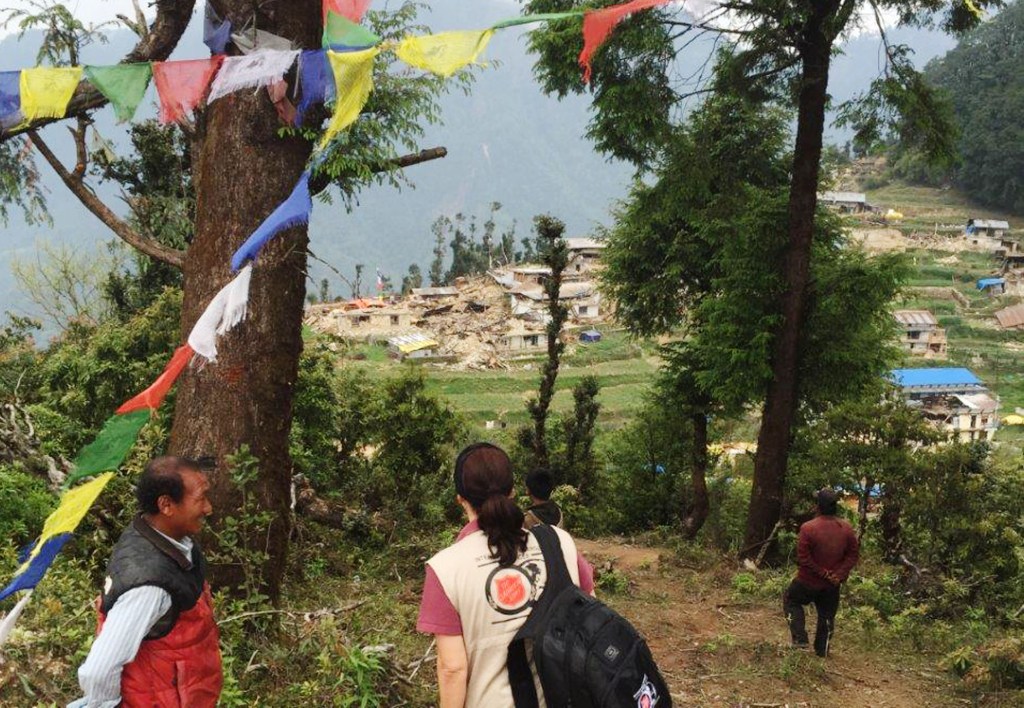
Salvation Army team members in a 2015 visit to Nepal, helped to establish relationships. These steps are important in building strength in responding to later disaster events..
There will always be an understandable urgency around the first hours of a disaster. We want to know what happened, how many people were affected and what help is reaching them. But perhaps some of the most important stories happen afterwards.
They are found in a church congregation giving up its floor so emergency workers have somewhere to sleep. In the volunteer handing out water. In a family in Indonesia still living with displacement weeks after the earth stopped shaking. In a cooling fan brought into an unbearably hot evacuation shelter. In Salvation Army teams, territories and support offices recognising that they really are ‘in this together’. And in a man called Freddy, searching day after day for three members of his family while still finding the words to express gratitude to those standing beside him.
Headlines move on. Disasters do not.
For the people living through the aftermath, their story continues. And The Salvation Army intends to continue with them.
For more information on the work of the Emergency Services Team click here
For news articles on Salvation Army response to current international emergencies click here
You must be logged in to post a comment.