
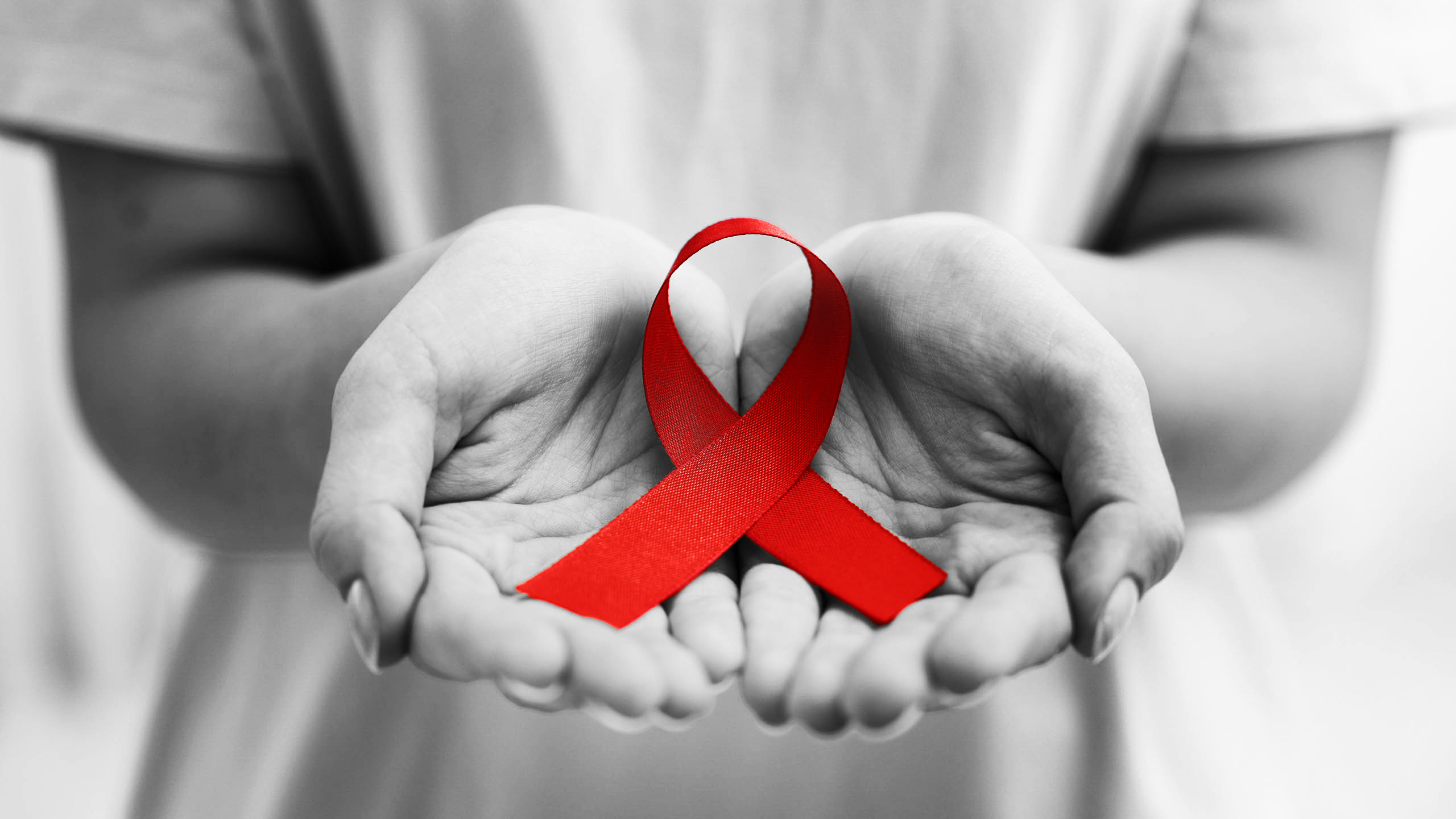
On World AIDS Day 2025 Salvation Army international development worker Samuel Shearer reflects on how far humanity has come and how far we must still go to end AIDS by 2030, the stated goal of the World Health Organisation
The Salvation Army’s mission to meet human need without discrimination has placed us at the bedsides, in clinics and within communities most affected by HIV/AIDS. On World AIDS Day 2025 Salvation Army international development worker Samuel Shearer reflects on how far humanity has come and how far we must still go to end AIDS by 2030, the stated goal of the World Health Organisation. As WHO joins partners and communities around the world today to recommit to fight this debilitating disease, The Salvation Army stands firm in its belief that hope, dignity and equitable access to care are not luxuries but rights.
1984: New York city, USA
Garrett is holding two clear-coated pills in the crook of his tongue. They are broad-spectrum antibiotics designed to abate the fever which rages through his body. He is desperately trying to swallow but is finding it difficult, as his body aches from the pneumonia slowly claiming his life. It is 1984 in New York City and Garrett is one of over 3000 people (mostly gay and bisexual men, due to underfunded sexual health services for them) diagnosed with Acquired Immune Deficiency Syndrome (AIDS), the final stage of the unrelenting Human Immunodeficiency Virus (HIV).
Not much is publicly known at this point about how to halt the seemingly unstoppable descent of HIV into AIDS. But what is becoming clear is that once the pneumonia hits, and the lesions become too many to count, you begin thinking in terms of pain management and not life extension.
The US Government is yet to meaningfully publicly acknowledge the epidemic. Very little provision has been made in health centres and clinics and there are almost no hospices for those dying of AIDS. But Garrett is not alone. Beside his bed, with blankets and soup, friendship and prayer, is a Salvation Army officer. Medically speaking, there is little they can do – for what hope have these meagre offerings against the ravages of the disease?
The Salvation Army exists to meet human needs in the spaces which seem hopeless. The HIV/AIDS epidemic is no different. In a mid-1980s world without solutions to a disease we are yet to understand, the church and charity is providing pastoral care and support to people pushed to the edges of society. As the disease evolves and reaches every corner of the globe, The Salvation Army will mobilise and meet people where they are, providing counselling for broken-hearted individuals and families, grieving alongside those with new diagnoses, praying with them and journeying with them as the disease develops; or running needle exchanges to help stop the spread through drug use. It isn’t enough, but whilst it is all we can do, it is what we will do.
1997: Harare, Zimbabwe
Sylvie is holding a white paper pot up to her lips. Looking past her nose, she can see the assortment of pills of varying colour and size. It is her cocktail of drugs which she and her doctor have spent months perfecting. The main drug she is taking is Azidothymidine, more commonly referred to as AZT – a common Anti-retroviral (ARV). It is 1997, and Sylvie is in The Salvation Army’s Howard Hospital, just outside Harare, Zimbabwe. She swallows the pills; they go down easily. She has been taking a version of these medications daily for nearly three years – ever since she sat in this same hospital, awaiting the test results that would change her life.
Sylvie is not a sex worker or a drug user. Sylvie is not the victim of an assault, nor is she careless with her sexual safety. Sylvie is like so many HIV patients: recently wed to a man who, unaware he was HIV positive, passed the virus on to her. Sylvie and her husband both receive treatment here at Howard Hospital, though it took them many months to decide to come for testing. They had feared they would be ostracised or looked down on. But an act of bravery brought them here, and every day, they are glad they took that step.
AZT has been publicly available for 10 years, making its way onto the market only 25 months after its effectiveness against HIV was first tested in a lab. The difficulty with ARVs in general is that finding the right dosage and cocktail for each individual can take years and needs regular reassessment as the virus changes and mutates. There are also the common side effects of nausea, headaches and fever to consider. And even then, no two patients are the same. Sylvie and her husband, Abraham, started taking ARVs at the same time. Her cocktail has remained the same for over a year now and she is responding well – her viral load remaining in constant, if slow, decline. Abraham’s body is not responding quite as well. But the tireless work of the doctors means he is not alone, and they continue to work to ensure he is getting the right medication. ARVs are now and will continue to be the biggest source of hope for those living with HIV. It is imperfect, but it works.
For Sylvie, the reason she is on AZT and not a different ARV is that she is six months pregnant; AZT is currently thought to be the only safe drug for the child growing inside her. The right amount of this life saving medication taken during pregnancy will greatly reduce the chances that Sylvie will pass the virus on to her child. This is not a guarantee, but it is a significant hope – which is no small thing. After giving birth, regardless of her child’s HIV status, Sylvie will not be able to breastfeed – her viral load, while in decline, is still too high. Although this causes her deep sadness, it is a sacrifice she will make to ensure the safety and future of her child.
In the months to come, Sylvie will deliver her baby at The Salvation Army’s Howard Hospital and she and her family will continue to receive not just medical treatment but also counselling and pastoral care, parenting classes, and enrolment in a support program for HIV positive families. This is not the life they would have chosen for themselves; it is not the dream they had for their futures, but it is also not a sad life or a broken one and, above all else, it is not a lonely one.
2009: Arasankhyzy, Tamil Nadu, India
Lakshmi is holding a long silvery-green capsule between her fingers. She pops it in her mouth without a second thought and swallows it with a few mouthfuls of her favourite soda. It is an over-the-counter iron tablet she bought from her local pharmacy, and it strengthens her against the long-term anaemia caused by HIV. It is the only medication she takes now, having used ARVs to successfully diminish her viral load to the status of ‘undetectable’ which also means she can no longer transmit the virus. ‘Undetectable’ means ‘Untransmissible’.
It is 2009 and Lakshmi is sitting in a Salvation Army hall in Arasankhuzy, Tamil Nadu, India. She is here with a group of 12 women who are part of a Salvation Army Village Savings and Loan Association (VSLA). The Salvation Army has more than 2000 VSLAs across the world, but this one is special. It caters specifically to women like Lakshmi: widows living with HIV and in need of a way to support themselves and their families.
Each woman in this group has received a small loan to assist with the setting up of her own business. Alongside this loan, Lakshmi has also received upskilling in business management and financial best practices. These are skills which she will use for the rest of her life, as she builds a business which can sustain her. Lakshmi has also been able to connect with other local women who have similar life experiences to her and who know what it is like to be on the outskirts of society.
There is still stigma attached to HIV and many people continue to see Lakshmi as ‘unclean’, or ‘contaminated’. But with the help of this supportive group of women and the local Salvation Army officers who host their VSLA meetings – along with the confidence of being a business owner – Lakshmi has learned that she is more than the disease that tried to claim her life.
She is not a diagnosis or a statistic; to reduce her to such a thing would be unforgiveable. Lakshmi is the reason humankind must continue to fund research, destroy stigma, and educate its younger generations. She is proof that HIV need not be a death sentence. She is the reason The Salvation Army does what it does and ensures hope perseveres in a suffering world.

Today: London, UK
I am holding a small blue pill in the palm of my hand. As an object, it is unremarkable, barely larger than a jellybean. I can turn it over between my fingers, I can drop it and lose it easily. It is only a thing. And yet it is so much more.
Chemically speaking, it is Emtricitabin and Tenofovirdisoproxil. And it saves lives. In layperson terms, it is more commonly known as Pre-exposure Prophylaxis (or PrEP) – a name which comprises a group of many different medications that perform a single function – the prevention of HIV transmission. When taken daily or event-based by HIV-negative people, PrEP reduces the risk of transmission by either 74% (injection-drug use) or a staggering 99% (sexual contact). The importance of this drug cannot be overstated. And yet, largely, it goes unsaid.
It is 2025 and I am at my desk at The Salvation Army’s International Headquarters in London, England. As I hold this PrEP in my hand, I am struck by the knowledge that my life – that yours – could have looked a lot like Garrett’s or the approximately 91 million people who have contracted HIV. But by the grace of God, instead of fear, we have hope.
PrEP is distributed in almost every Salvation Army centre providing HIV/Aids care. In rural Papua New Guinean health centres; in bustling Zambian Hospitals; throughout Bolivian mobile community health camps and at day centres in downtown Chicago and New York where diligent workers provide health and spiritual care to sex workers and the unhoused.
The true ramifications of this astonishing step forward in preventative treatment cannot yet be seen, as PrEP only became widely available across the globe in 2023.
It is 2025 and I am at my desk at The Salvation Army’s International Headquarters in London, England. As I hold this PrEP in my hand, I am struck by the knowledge that my life – that yours – could have looked a lot like Garrett’s or the approximately 91 million people who have contracted HIV. But by the grace of God, instead of fear, we have hope.
As I write, uncertainties about future funding in the United States are raising concerns for the potential to disrupt HIV/AIDS services and vital ongoing research and development. One such funding source has been credited with saving millions of lives – providing lifesaving, preventative programs that are the reason the world has access to this miraculous little blue pill less than 50 years after HIV first reared its head. But there has been huge progress and there is still hope.
Hope for the future
There will come a day when there will be no need for HIV medication and when we will have eradicated this cruel disease. Until then, the Salvation Army, among other global and local organisations, is as committed today to its work around the world with those living with HIV, and those most at risk of transmission, as we were all those years ago when it was unknown and secret.

You must be logged in to post a comment.